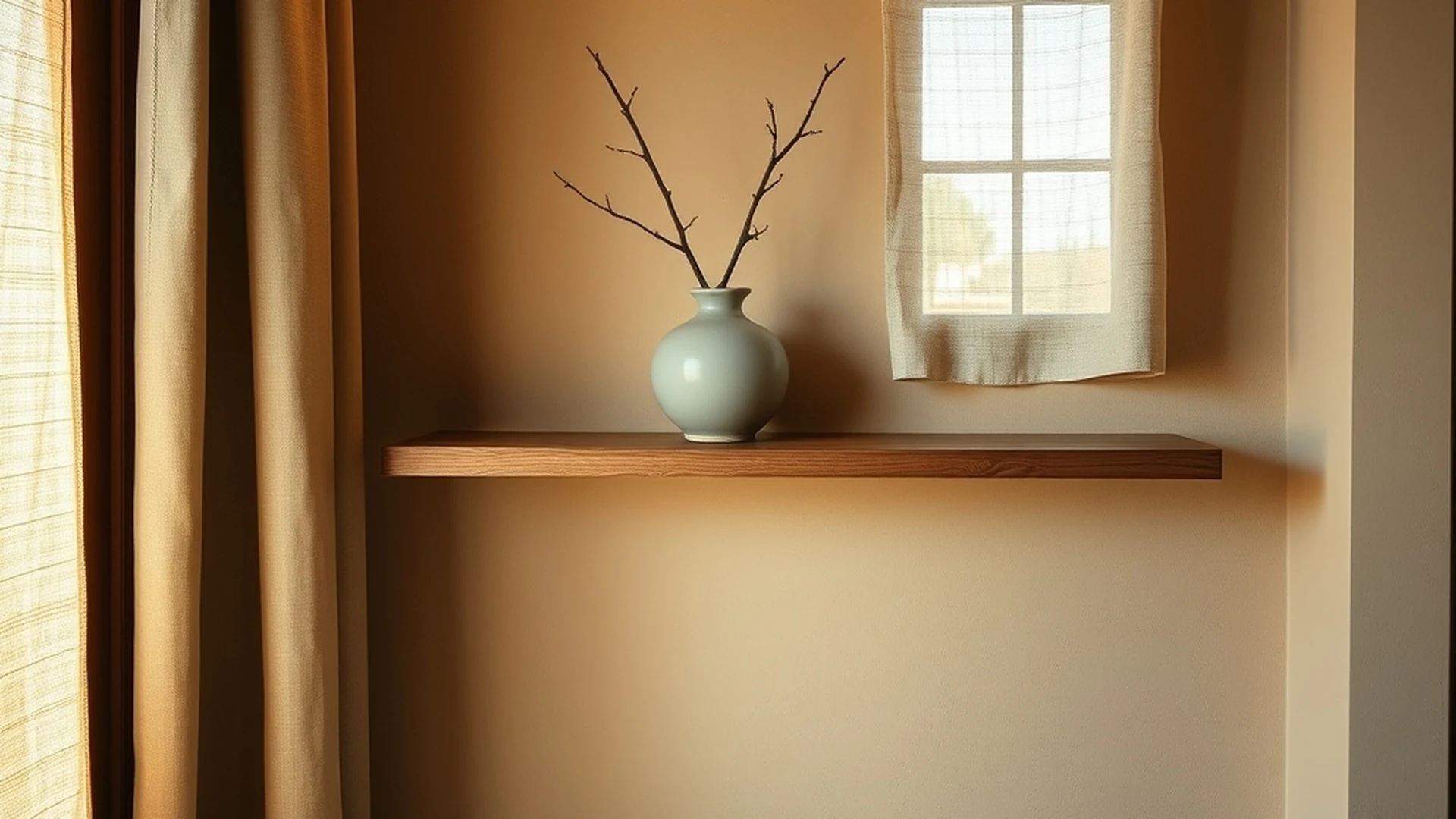
Most small entryway ideas fail for the same reason: they try to fit a foyer into a space that will never be one. A 90 cm strip beside the door cannot hold a console, a mirror, a basket and a chair — so it holds nothing, and the street walks straight into the living room. The tea room solved this four hundred years ago. The tokonoma — the alcove that hosts a single scroll and a single flower — is not decoration. It is a pause built into the wall: a pocket of deliberate slowness that the eye must cross before the room begins. Scaled down and borrowed, it gives a tiny entry what architecture cannot.
Why a small entryway needs a spatial pause
In Field Log 05 we treated the front door as an attention gate: arrival is a context switch — street-self to home-self — and the first thing the eye meets sets the reference mood for everything behind it. A small entry usually offers the eye either a wall of coats or a straight view of the mess it came home to. Both say "keep moving". A spatial pause says the opposite: here is one composed thing, lit warmer than the room, asking for nothing. The body reads the register change before the mind catches up. Shoulders drop somewhere between the second and third step.
The pause is not a seat and not storage. It is a display of restraint — and restraint is what a small entry has in abundance. Where a large foyer persuades with square metres, a tiny one persuades with edit. Sixty centimetres of wall, arranged with the discipline of an alcove, outperforms a console table drowning in mail. Our Genkan Design Guide builds the functional layer — bench, tray, border; this guide builds the psychological one, the thing that makes the functional layer feel intentional instead of cramped.
Tea alcove logic: three elements in 60 cm
1. The ledge. The tokonoma is raised — its objects sit above eye-fall, so looking becomes lifting the gaze. A shallow oak ledge, 50–60 cm wide and 18–22 cm deep, mounted or leaned at 100–120 cm, does the same work in a hallway: the surface is too narrow for clutter to accumulate and too high to become a dumping ground. The constraint is the design.
2. One object. The alcove holds one thing — a vase with one branch, a bowl, a small stone. Two objects are a collection; one object is a statement. Rotate it with the season the way the tea room rotates its scroll: a bare branch in winter, a sprig of something green in spring. The rotation teaches the entry to change, which keeps the eye from editing it out.
3. One warm light. The alcove is lit slightly warmer and slightly dimmer than the room — in the tea room, daylight filtered through shoji; in a windowless hall, one 2700K source at ledge height, aimed at the object. The contrast does the zoning: bright, cool rooms say "act"; a warm, dim pocket says "arrive". Keep the pause about 30% dimmer than the living room and the eye will find it the way it finds a candle.
Small entryway ideas — dimensions that hold the pause
| Ledge | 50–60 cm wide × 18–22 cm deep, solid oak or bamboo, at 100–120 cm height. Freestanding leaning shelves count; wall drilling is optional. |
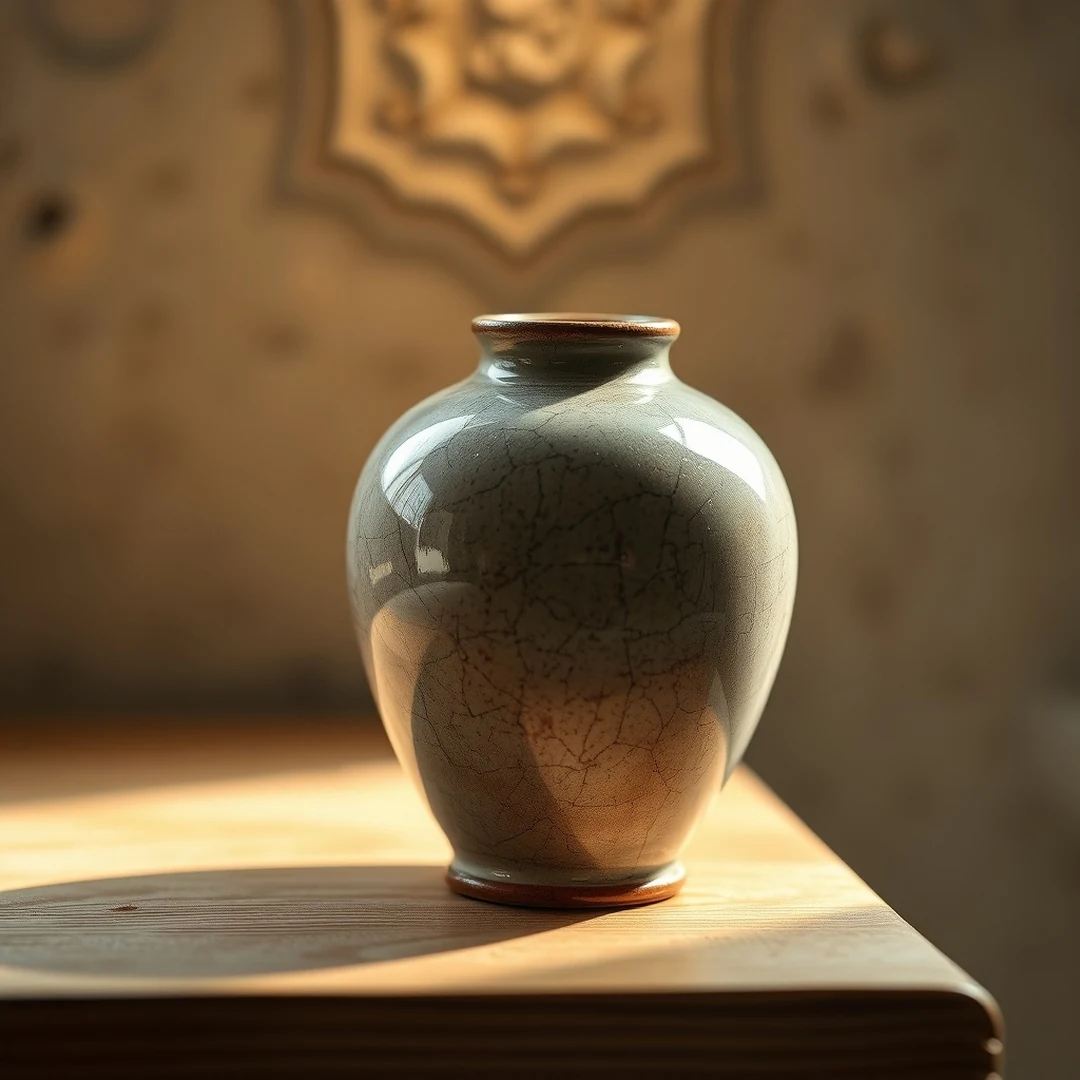
| The object | One handmade vessel under 25 cm tall, matte or crackle glaze. Rotate seasonally — the change is the ritual. |
| Light | One 2700K source at ledge height — a picture light, a shaded wall lamp or a lantern. Aim at the object, keep spill low. |
| Wall behind | Quiet texture preferred: limewash or clay plaster softens the glow and hides the rental behind it. Flat white paint flattens the light. |
| Floor anchor | One woven mat or pebble tray beneath, 60 × 35 cm. It marks where the pause begins underfoot, even without a step. |
| Negative space | Keep 40 cm clear on both sides of the ledge. Clutter beside the pause reads as noise; the void is part of the alcove. |
A renter's checklist for the pause nook
· Pick the wall the eye meets first when the door opens — not the wall you like, the wall you see.
· Set the leaning shelf or ledge at 100–120 cm; test that the top is visible from the doorway without tilting the head.
· Place one object and live with the emptiness for three days before adding anything. The urge to fill it is the habit the pause is curing.
· Swap the overhead bulb on the hall circuit for 2700K, or add a plug-in shaded lamp at ledge height — no electrician, no landlord conversation.
· Lay the mat on the room side of the threshold so the feet cross from hard to soft exactly as the eyes cross from bright to warm.
· Change the object with the season, once. A pause that never changes becomes wallpaper; one that changes stays a ritual.
Sixty centimetres of wall, one object, one warm light. The entry does not need to be bigger; it needs to be slower. The tea room knew it four centuries ago — arrival is a ceremony, and a ceremony needs an alcove. See the full field log: Field Log 05: The Japandi Drop Zone →
Three pieces for the pause
Shallow enough that clutter cannot gather — 20 cm of oak is the whole stage the pause needs.
One object, imperfect glaze, under 25 cm. The alcove's single statement — rotate it with the season.
Warm light aimed at the object, no wiring. The 30% dimmer pocket that tells the eye to slow down.
Affiliate Disclosure: As an Amazon Associate, Komorebi Threshold earns from qualifying purchases.
Continue the study with us
Each week the lab publishes one field log — a measured room, a corrected mistake, a calmer threshold. Join the discussion on Facebook, and watch the full field investigations on YouTube.
Interior imagery in the video is AI-illustrated and labelled as such on YouTube.