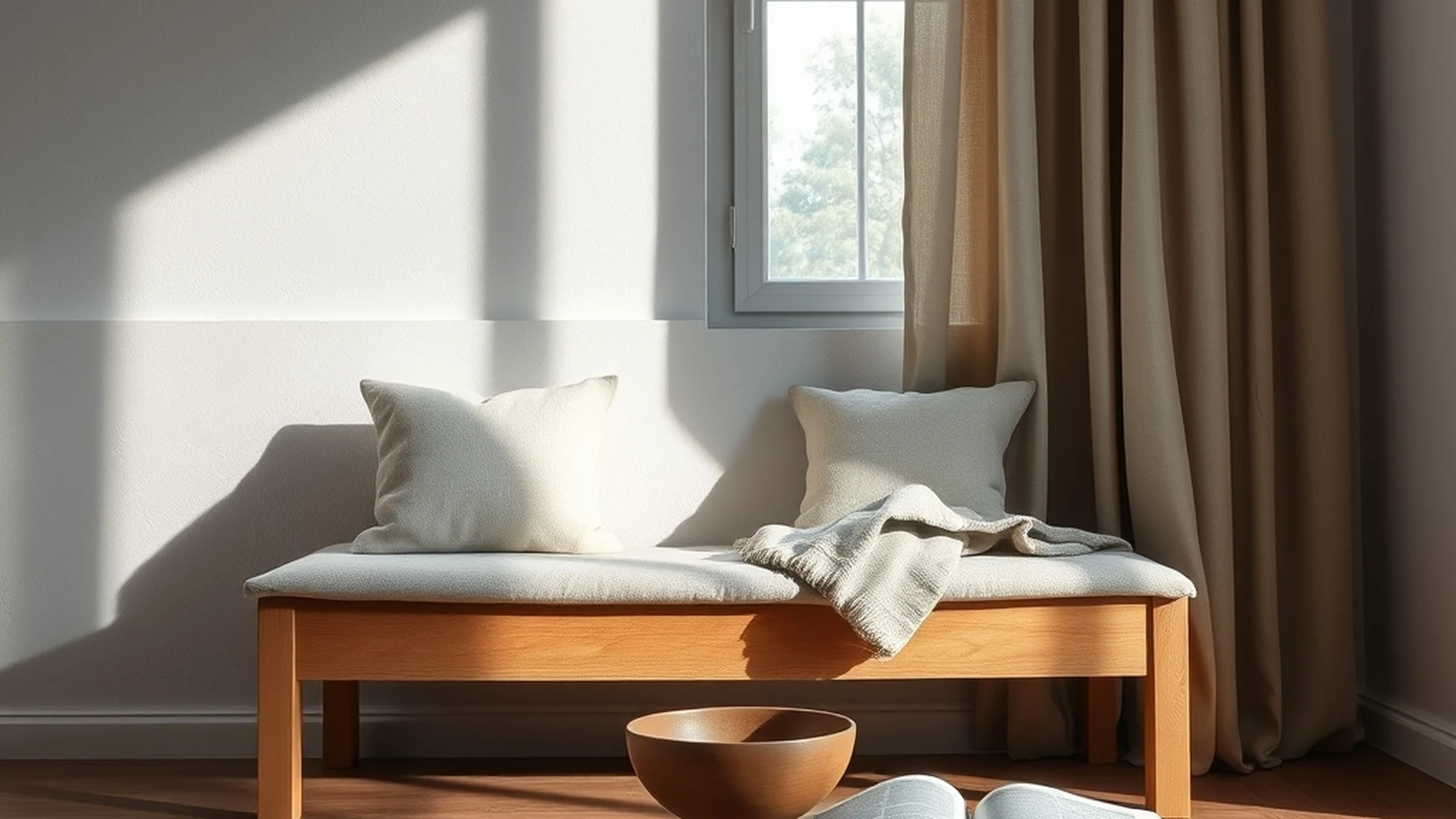
Limewash walls ask for nothing your eye cannot do on its own. Stand a metre from a flat painted wall and your gaze keeps travelling — across the paint, across the glare, across the hard line where wall meets ceiling — taking small, unrewarded trips hundreds of times an evening. Stand the same metre from limewash and the trips stop. Every trowel mark catches the light a little differently, and the wall dissolves into a quiet rhythm of soft shadows. The surface has not changed colour. It has changed its behaviour toward attention.
Why limewash walls change a room's mental load
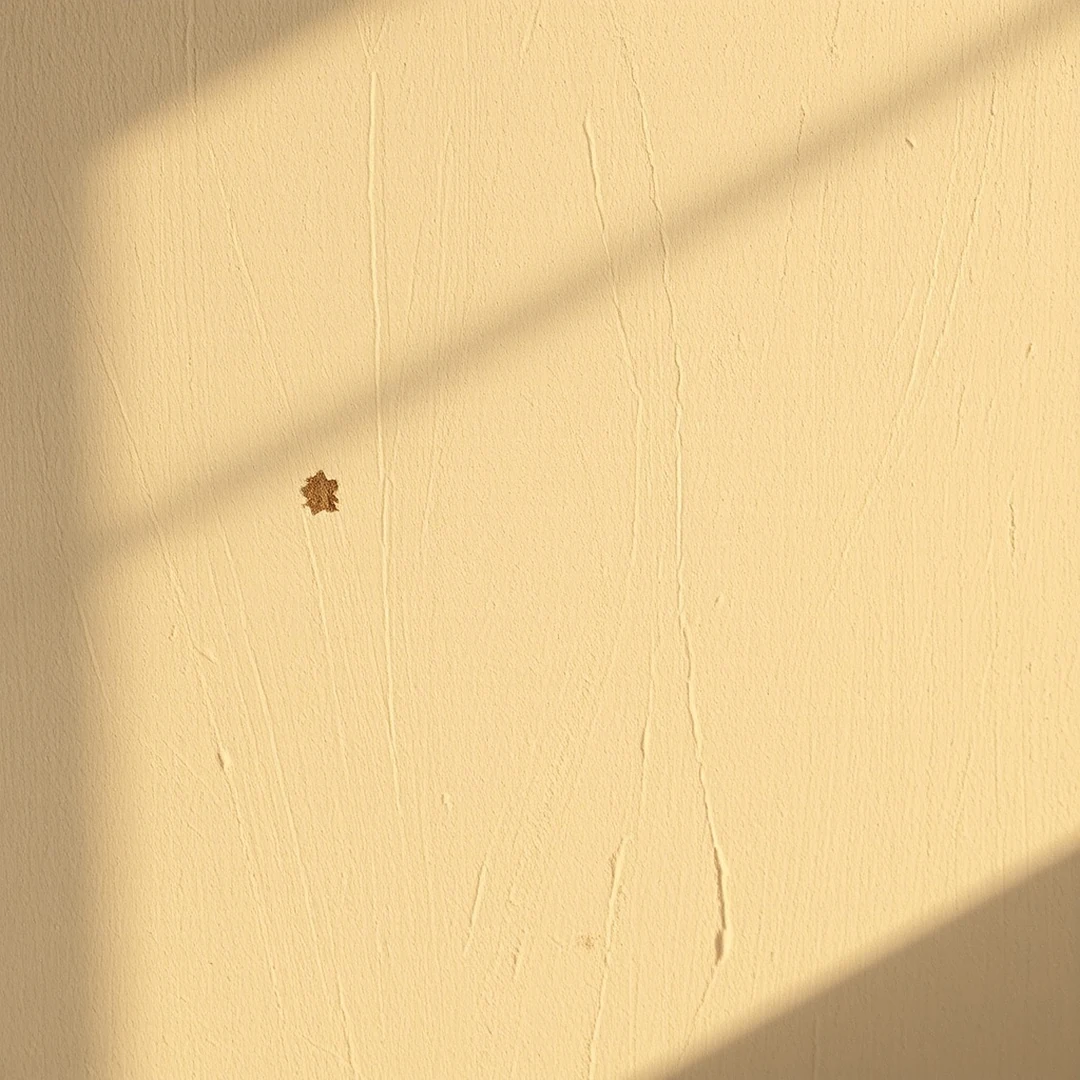
In Field Log 02 we called the cost of flat surfaces visual friction: the quiet tax a featureless room charges your attention simply for sitting in it. Micro-texture interrupts the tax at its source. When daylight rakes sideways across hand-troweled limewash, each mark casts a shadow thinner than a fingernail — and the wall stops being a blank to scan and becomes a pattern to rest on. This is why the effect protects mental energy rather than merely decorating. A textured room gives the nervous system fewer decisions to make: contrast arrives gently instead of in hard steps, the gaze lands, lingers, releases.
There is an acoustic bonus the field log measured in passing. Soft, fibrous, uneven surfaces absorb the small reflections that make a hard room feel brittle — footfall dulls, voices soften, the high papery echo of a rental box recedes. Limewash itself is thin, but it is almost always the excuse to start layering: linen curtains against the plastered wall, an oak bench beneath it, a woven rug crossing it. The wall is the thesis; the room becomes its supporting evidence.
Limewash paint vs clay plaster: choosing your micro-texture
The two finishes most people mean by "limewash" behave differently, and the choice decides how much calm you get per hour of work.
| True limewash paint | Crushed limestone in water. Thin, matte, subtly mottled; the classic clouded effect comes from overlapping broad strokes. Forgiving for beginners, repaintable, and the most renter-adjacent of the textured finishes. |
| Clay plaster | Earth, sand and fibre, troweled thicker. Deeper relief, warmer hand feel, better acoustic softening — but heavier to apply and harder to reverse in a rental. |
| Texture depth | Limewash: visual mottling, 1–2 mm of relief. Clay plaster: true relief up to 3–4 mm. Both beat flat paint; only plaster changes the room's sound. |
| Renter reversibility | Limewash can be primed over in one coat. Clay plaster needs skimming. If the lease is strict, limewash is the answer. |
| Cost per wall | One accent wall (3 × 2.5 m): limewash kit covers it for roughly the price of two good dinners; clay plaster roughly double, plus a trowel. |
Limewash walls — renter-safe application specs
One wall is enough. The wall behind the place you sit longest — sofa, reading chair, bed head — gets the texture; the other walls stay flat so the eye has somewhere plain to go when it wants plain. Painting all four walls in texture is how a calm idea becomes a cave.
| Coats | Two, sometimes three on a dark base. First coat blocks, second builds the cloud effect. Let each dry fully — rushing flattens the mottling. |
| Stroke pattern | Broad, overlapping X or figure-eight strokes with a wide block brush, 1–1.5 m sections. Random, not striped: regularity reads as wallpaper. |
| Colour | Warm whites, bone, pale clay. Texture shows best in mid-tones; pure white flattens it, dark tones demand perfect light. |
| Light placement | The wall needs raking light — a side window or a 2700K wall washer grazing across it. Flat overhead light kills the shadows the texture exists to make. |
| Sealing | Do not seal with gloss. If a bathroom-grade sealant is needed, use a matte mineral sealer or the wall loses its matte calm. |
Mistakes that flatten limewash (and how to avoid them)
· Painting under a flat ceiling light, then wondering where the texture went — move a lamp to graze the wall before judging the finish.
· Choosing a cool grey "for the Japandi look" — the look is warm restraint; cool grey under 4000K light reads as concrete, not calm.
· Brushing in straight vertical passes — stripes announce the hand; random overlapping strokes disappear into rhythm.
· Texturing the TV wall — the one surface the eye must scan at speed should stay the plainest in the room.
· Skipping the sample board — paint a 60 × 60 cm board, prop it on the wall for three days, watch it in morning and evening light before committing.
A limewash wall is the cheapest structural change a rental allows: no drilling, no carpentry, one weekend. What it buys is not a new colour but a new behaviour — a wall that asks nothing of the eye, in a room that finally lets attention rest. See the full field log: Field Log 02: The Texture That Quiets a Room →
The limewash starter set
Crushed-limestone paint sized for one accent wall — the mottled cloud effect in two coats, primer-friendly for renters.
The tool that makes the texture: broad overlapping strokes a roller cannot fake. One brush does the whole wall.
Raking warm light that grazes the plaster and wakes the shadows up at night — no wiring, renter-safe.
Affiliate Disclosure: As an Amazon Associate, Komorebi Threshold earns from qualifying purchases.
Continue the study with us
Each week the lab publishes one field log — a measured room, a corrected mistake, a calmer threshold. Join the discussion on Facebook, and watch the full field investigations on YouTube.
Interior imagery in the video is AI-illustrated and labelled as such on YouTube.