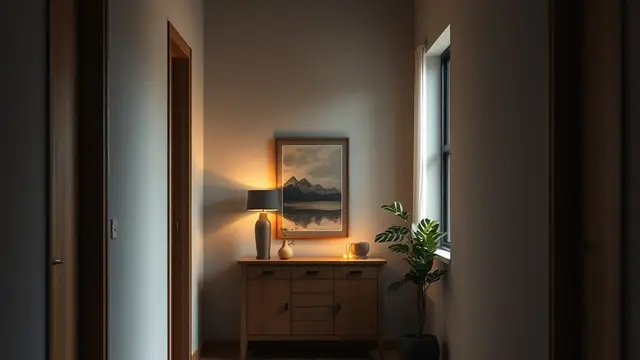
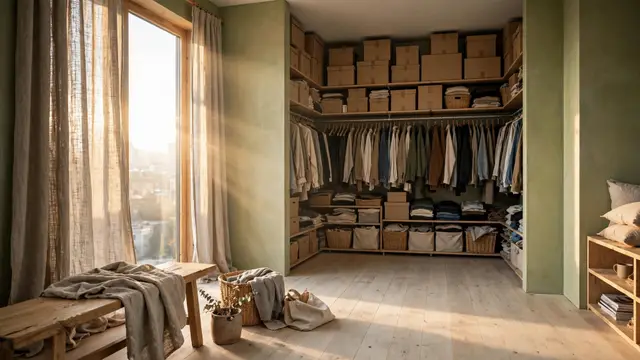
Entryway
Seven Japanese Habits That Keep a House Tidy Without Constant Cleaning
The mess is not dirt. It is where things land when you walk in. Seven small habits from Japanese homes, each with a measurement and a ten-second test you can run tonight.
You wipe the floor and clear the table, and by Thursday the shoes and the mail are back. So you clean more often. Another Sunday with the vacuum, another set of bins on the floor. It never holds.
That is because the mess is not dirt. It is where things land the moment you walk in. Japanese homes settle that before anyone picks up a cloth. Small habits decide where things stop, and the room stays clear. Here are seven of them, each with a measurement and a test.
Watch the video version

Prefer to watch? The full walkthrough is on our YouTube channel. Subscribe for a new room guide every week.
1. Draw a line at the door
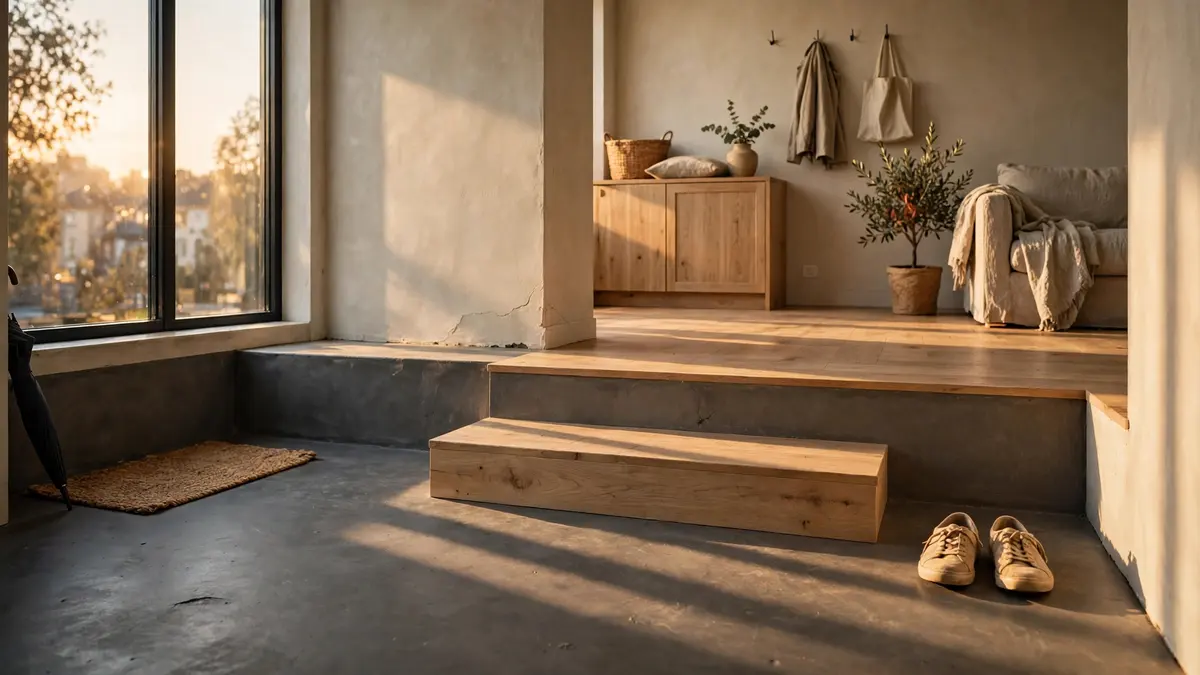
In a Japanese entry the floor drops below the main room. Shoes stay down there and you step up into the house. You do not need a lowered floor. A mat, a tray and a clear edge draw the same line.
Put tape at the edge of the mat tonight. Count the pairs of shoes beyond it. One pair each at the door, the rest in a closed shelf. Give the coat one hook and the keys one dish within arm's reach. Anything without a place lands on the nearest flat surface. The full setup is in the drop zone guide.
2. Keep water in one place
Damp things carry dust and stale smell with them. Give wet items one zone: a tray for wet cups, damp towels and soap on one side, and everything dry on the other. A towel over a bedroom chair is where stale smell starts. Hang each towel on its own hook with a hand's width between them so air reaches the cloth. The wet and dry zones guide goes further for bathrooms.
3. One job per surface
The table holds meals, the shelf holds books, the windowsill holds light. When a surface has two jobs, mail lands beside the fruit bowl and neither stays clean.
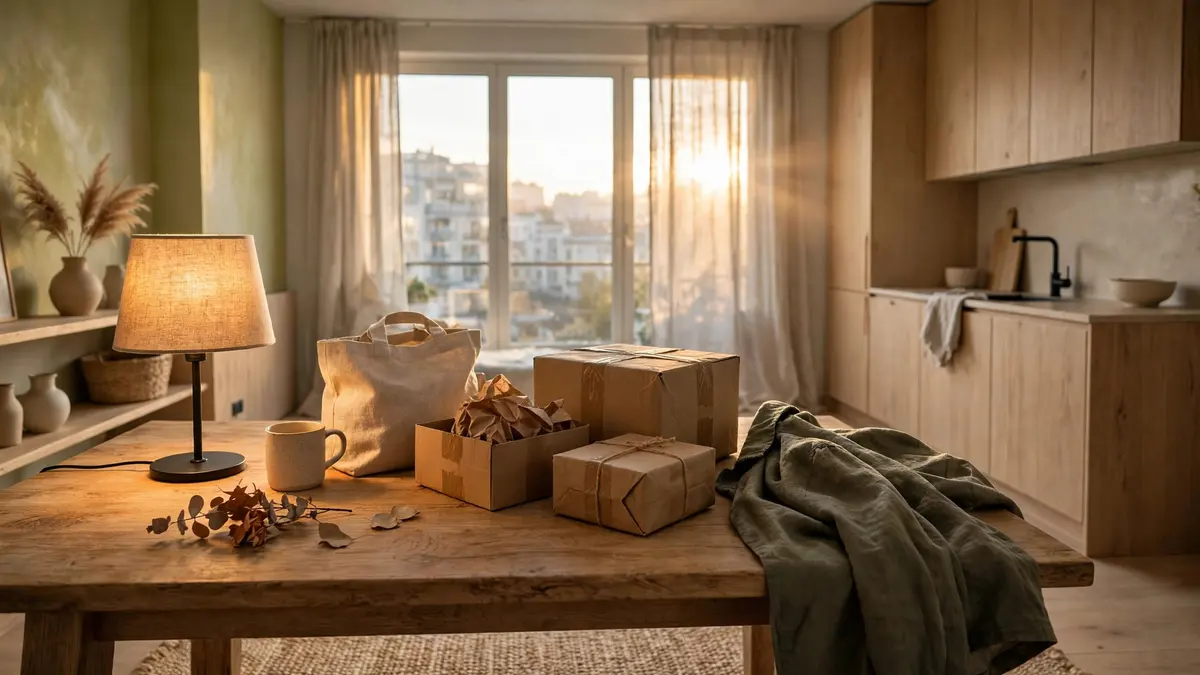
Walk the room and name every flat surface by its one job. If you cannot name it, it is collecting. Clear it tonight. Do not buy a basket for the strays: the basket becomes a second table and fills in a week. Removing a surface beats organizing it.
4. Keep one clear strip of floor
Traditionally, bedding is folded away each morning so the room works as a living room by day. Copy it with a folded throw and a stacked pillow. Stand in the doorway and look for one clear strip of floor about an arm's length wide running through the room. A laundry rack that stays up all week parks in the middle of that strip and ends the path. See also what Japanese homes leave out.
5. Move the air
Clothes usually hang outside in Japan, so the window does a lot of work. Open two windows on opposite sides for ten minutes each morning. Cracking one window an inch pulls nothing through, so the room stays as damp as before.
6. Swap seasons twice a year
Heavy blankets, coats and winter cushions leave when the weather turns and light ones come out. Pick two dates, write them on the calendar by the door, and change one shelf on each. If something will not fit in the box next season, that is the thing to let go. The rotation guide has the method.
7. Reset for ten minutes at the same time every day
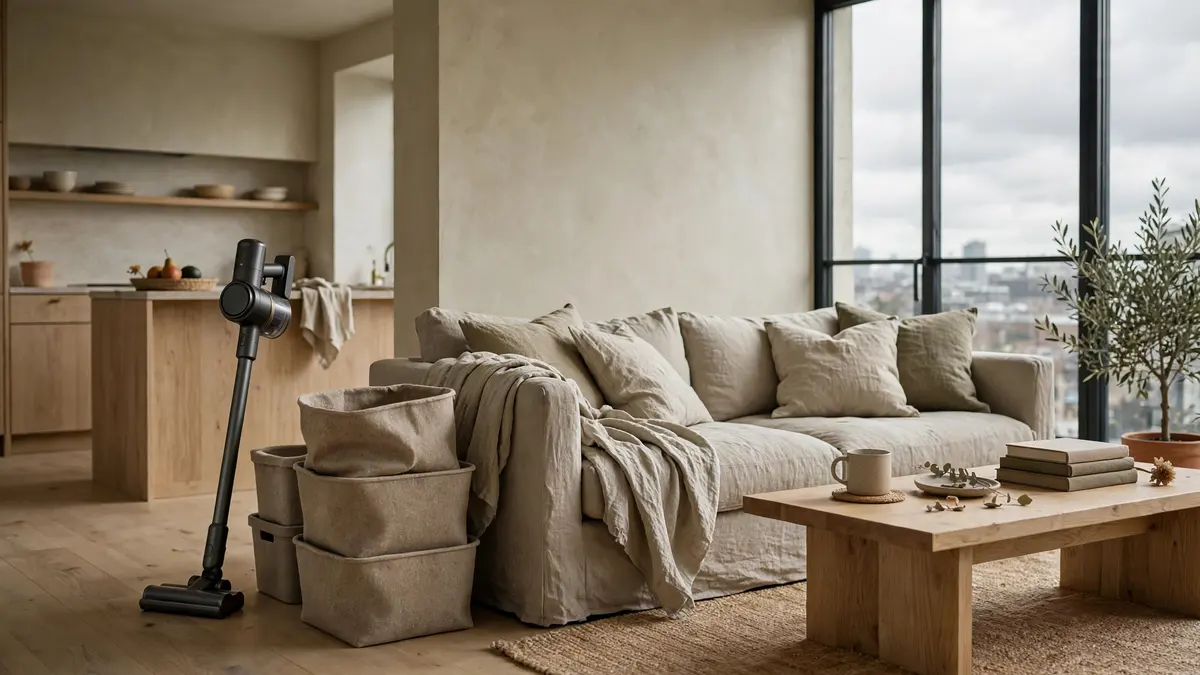
Not a clean, only a return of things to their places. A fixed time means you stop negotiating with yourself. Set a timer for ten minutes after dinner and go in this order: door line, surfaces, floor strip. Then stop. A reset that always ends keeps you willing to start it tomorrow. If it turns into a deep clean, the first tired evening you skip it and the habit dies with the skip.
Small flat, no hall
Use the back of the door as your line: one hook, one tray on the floor beside it. In a rental with no storage, one closed box under a bench is enough for the seasonal swap. With a partner or children, agree on the door line and the clear strip, and skip the rest until those two hold.
Do not start all seven on Monday. Pick the door line this week and add one habit each week. One habit that holds beats seven that collapse.
What to look for
As an Amazon Associate I earn from qualifying purchases. These links open Amazon search results; we may earn a commission at no extra cost to you. You do not need to buy anything to use this guide.
- Woven entry matMarks where the street ends.Search on Amazon
- Boot and shoe trayKeeps wet shoes on the low level.Search on Amazon
- Closed shoe benchA wall instead of a pile.Search on Amazon
- Adhesive wall hooksOne hook for today's coat, no drilling.Search on Amazon
- Seasonal storage boxOne box for the twice-a-year swap.Search on Amazon
Save these ideas


Images in this guide are AI-generated illustrations of the ideas described, not photographs of real homes.