Entryway
No Room for a Genkan? How to Build a Small Entry Zone in 60 cm
No hallway, no closet, shoes by the door. Build a small genkan-style zone from one mat, one bench and one shelf, using about 60 cm of wall.
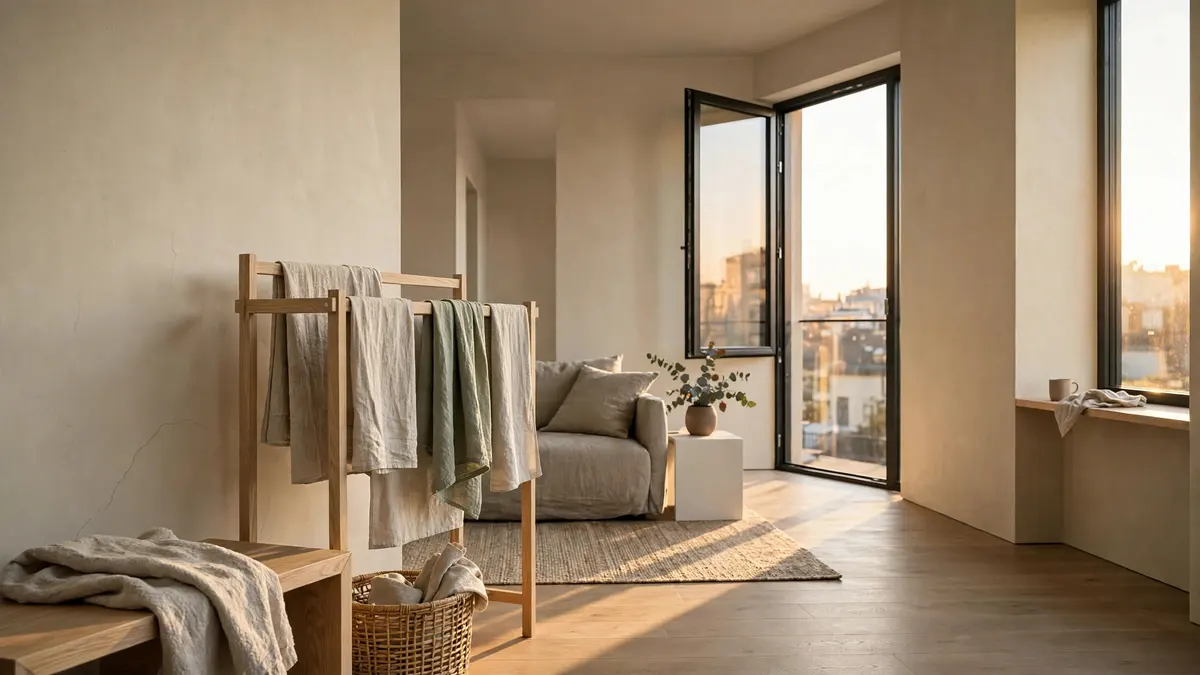
You open the door and your shoes are already in the way. There is no hallway, no closet, only a strip of floor that is both the entrance and the living room. Most small flats have exactly this.
A genkan is just a rule about where outside ends and inside begins. You can build that rule in about 60 cm of wall.
Watch the video version

Prefer to watch? The full walkthrough is on our YouTube channel. Subscribe for a new room guide every week.
What a genkan actually does
It gives your shoes a place that is not the rest of the floor. The step matters less than the edge. When shoes, wet soles and bags stop at a visible line, the room behind it stays calm.
Step 1: mark the edge
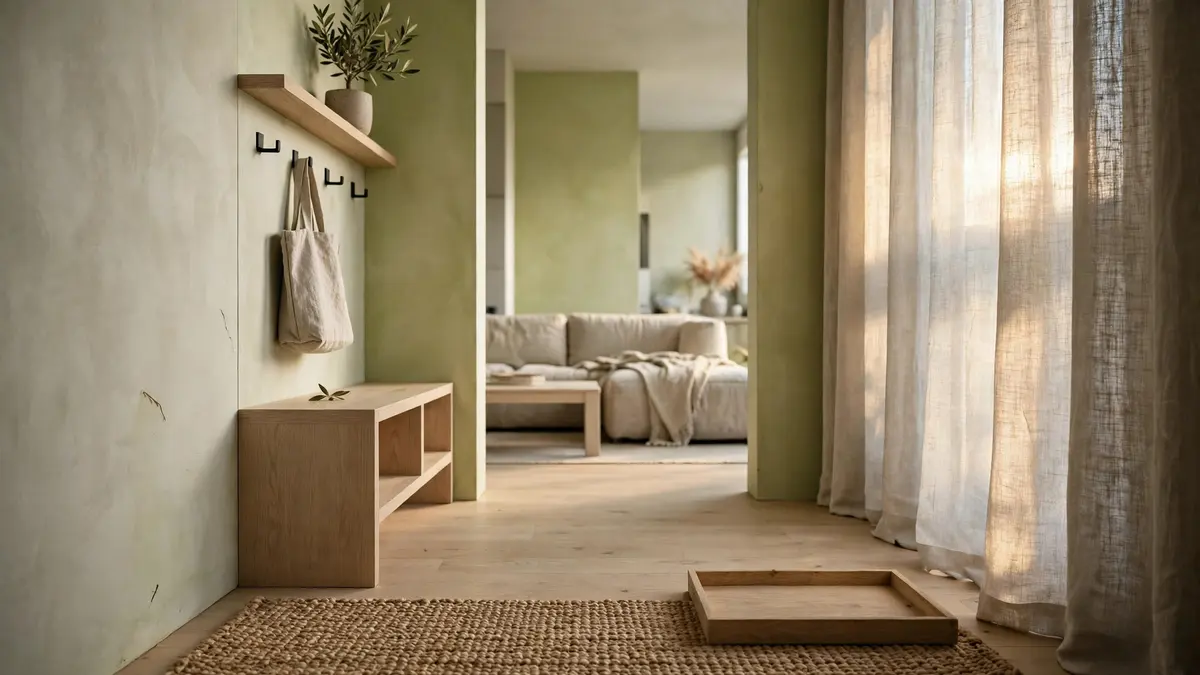
Lay one flat mat just inside the door, roughly 60 by 90 cm. A rubber-backed mat with a low pile works best. This is the only place shoes may stand.
Step 2: one seat
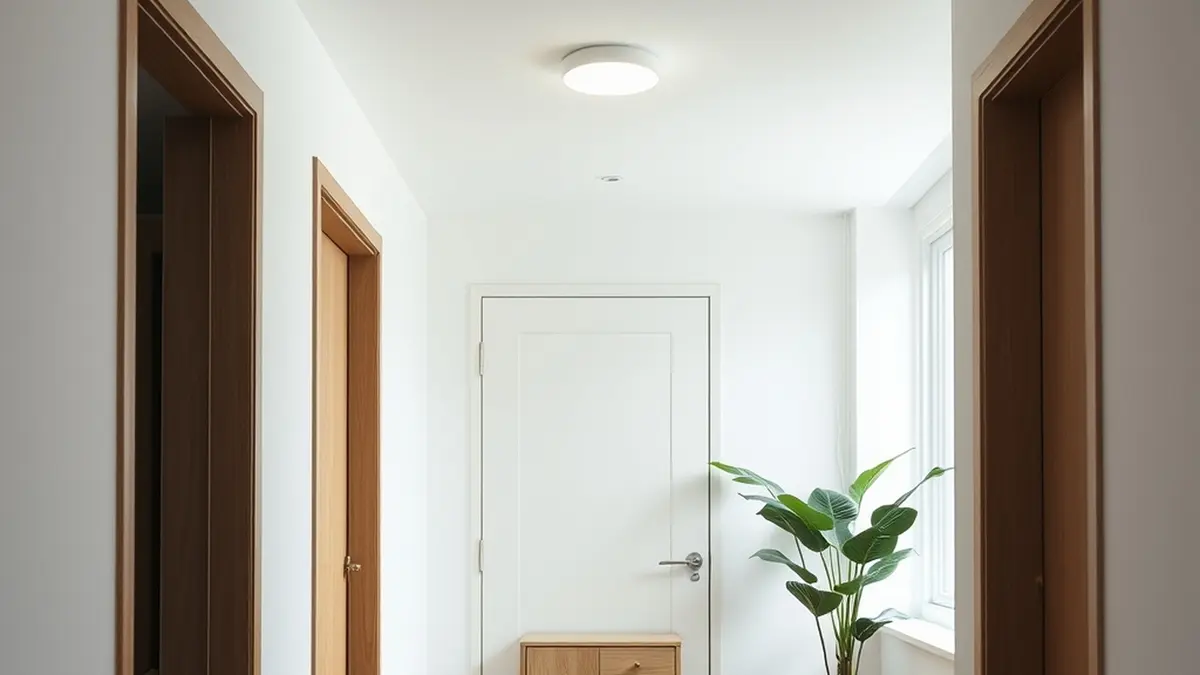
Add a narrow bench or a sturdy low stool beside the mat, at about knee height. Sitting makes shoes easier to put on and take off, and it gives the bag somewhere to land. Keep the bench slim so the door still opens fully, as covered in the front door drop zone guide.
Step 3: one shelf, one pair per person
Fit a shallow shelf or a slim shoe rack above or beside the bench. The limit is the point: one pair per person on the shelf, the rest in a wardrobe elsewhere. The shoe limit rule explains how to choose which pair.
Step 4: a place for wet things
A shallow tray under the mat or beside it catches rain and grit. Wipe it when you wipe the mat.
Common mistakes
- A mat that moves. Use a non-slip underlay or you will trip on it.
- A bench that blocks the door. Measure the swing first.
- Too many shoes. More than three pairs in sight and the zone stops reading as a pause.
What to look for
As an Amazon Associate I earn from qualifying purchases. These links open Amazon search results; we may earn a commission at no extra cost to you. You do not need to buy anything to use this guide.
- Low pile non-slip entry matDefines the edge and holds grit.Search on Amazon
- Narrow shoe benchSit to change shoes without blocking the door.Search on Amazon
- Slim shoe rackTwo pairs per person, no more.Search on Amazon
- Boot trayCatches wet soles and grit.Search on Amazon
- Over-the-door hooksKeeps coats off the floor when walls are off limits.Search on Amazon
Save these ideas
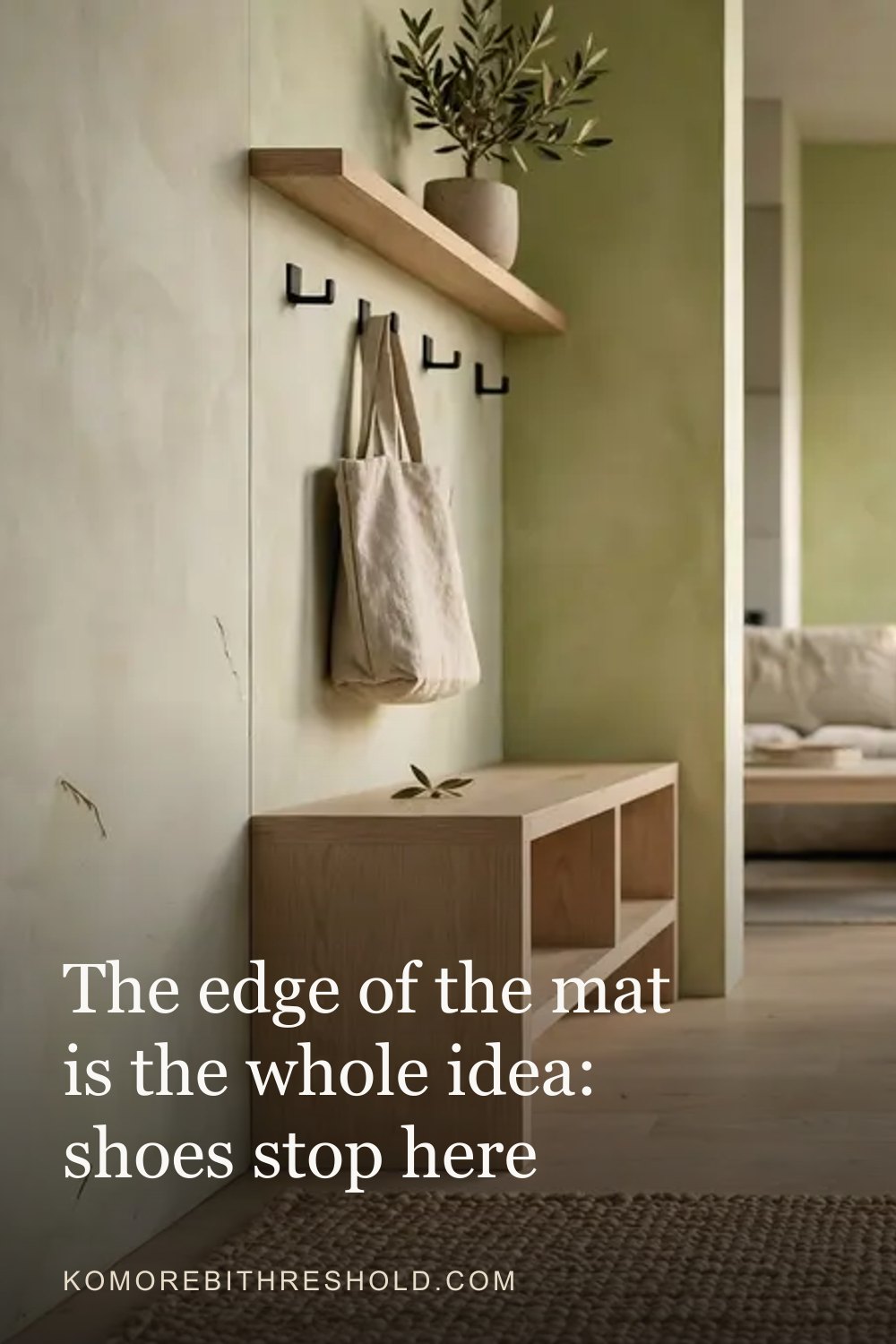
Images in this guide are AI-generated illustrations of the ideas described, not photographs of real homes.