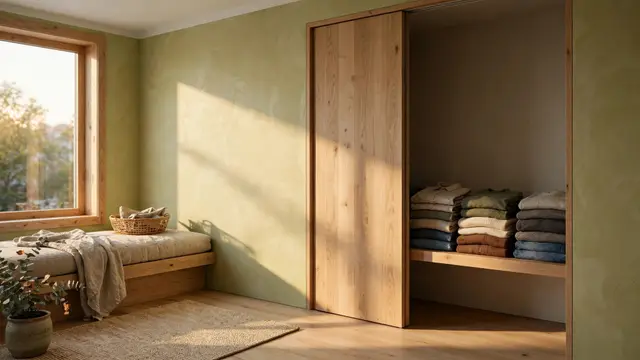
Bedroom
Full Wardrobe, Nothing to Wear? Rotate Clothes by Season
A packed wardrobe hides what you actually wear. Move one season out of the room, cap the rail, and see only what suits this month.

Your wardrobe is packed, yet you wear the same five things every week and call the rest a maybe. So you buy slimmer hangers and an organiser. The rail holds more, but now you cannot see what is on it.
The wardrobe is not too small. It is showing you every season at once, so the clothes you want hide behind the ones you do not.
How a Japanese household handles it
Many Japanese households change their clothes twice a year. The practice is called koromogae. In spring and autumn, one set is washed, folded and stored, and the other comes out. At any time the rail holds one season only.
The storage matters less than the rule: one season in reach, one season in a box. The box goes under the bed or up high.
Most wardrobes try to hold the whole year. That is four seasons on one rail and a door you can barely close. Crowding also wears the clothes: fabric pressed on fabric creases, and you end up ironing the thing you wanted to wear.
A quick test
Without looking, name the shirt you wore last Tuesday, then find it in the wardrobe and time how long it takes. After the steps below, try again.
Four steps, one afternoon
Empty the rail onto the bed and start with the pile you actually wore.
- Sort into three groups: worn this month, maybe, gone. The jacket you love in theory always lands in maybe.
- Hang the worn pile back, all facing the same way, coats first because they set the rhythm of the rail. Leave a finger's width of air on each side of every hanger.
- Box the off-season pile. Fold flat, label the lid with the month, and slide it under the bed. Make sure wool is fully dry first, since a damp jumper in a sealed box can smell or spoil.
- Set the changeover dates. Put a reminder in your phone for each spring and autumn.
Add one cap: about twenty hangers on the rail. When something new arrives, something goes into the maybe box.
Fold by type
Knitwear and T-shirts live folded in rows standing on edge, so you can see every piece. Deep piles hide the bottom shirt forever.
Special cases
- Small flat: use the space under the bed for the box and a hook on the door for tomorrow's outfit.
- Shared wardrobe: half the rail and one box each, so the changeover is two small jobs, not one argument.
- Mild climate: split by use instead of season: work on the left, weekend on the right.
- Clothes that don't fit right now: box them with a dated strip of tape and look again in six months. You are not throwing anything away, just deciding when to decide.
Stop buying the second shirt
A crowded wardrobe makes you shop for what you already own. Before you buy, look for the nearest match on the rail. If you find one in ten seconds, you do not need another. Light helps too: a small lamp inside the door, or leaving it open, makes choosing quicker.

Need the whole bedroom to feel calmer? Read why your bedroom never feels restful.
What to look for
As an Amazon Associate I earn from qualifying purchases. These links open Amazon search results; we may earn a commission at no extra cost to you. You do not need to buy anything to use this guide.
- Under-bed storage boxesHolds the off-season set flat and dry.Search on Amazon
- Slim wooden hangersKeeps the rail even and the spacing consistent.Search on Amazon
- Cedar blocksA natural way to keep stored wool fresh.Search on Amazon
- Door hook rackHolds tomorrow's outfit and keeps the chair clear.Search on Amazon
Save these ideas



Images in this guide are AI-generated illustrations of the ideas described, not photographs of real homes.