Layout & Small Spaces
11 Things Japanese Homes Leave Out, and Why the Floor Stays Clear
A Japanese home does not organise the extras. It leaves them out. Here are eleven things left out, each with a test you can run tonight.
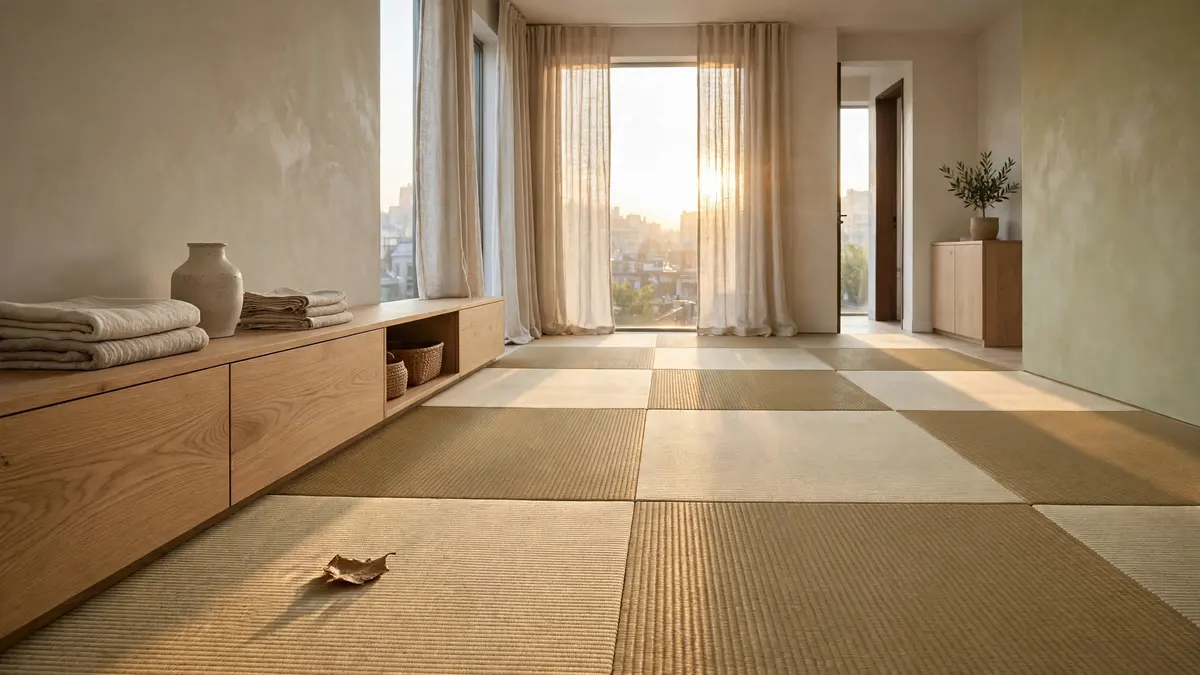
Your floor is the one place in the house that never gets a rest. Shoes, a rack, a bag and a basket all live there. So you buy something to hold them, and the holder joins the pile.
A Japanese home goes the other way. It does not organise the extras. It leaves them out, and the floor stays clear with little effort. Pick the three that cost you the most space and ignore the rest.
Watch the video version

Prefer to watch? The full walkthrough is on our YouTube channel. Subscribe for a new room guide every week.
The eleven, each with a test
- Outdoor shoes. They stay in the genkan, the lowered entry. Test: tape a line where your mat ends and count the pairs beyond it. Anything over one pair each goes into a closed shelf.
- The bed frame. Traditionally you sleep on a thin mattress on the mat and fold it away. Test: strip the bed for a morning and stack the bedding. If the floor feels different, try a floor mattress for a week.
- The oven and the dishwasher. Many small Japanese kitchens have neither. Test: open yours. If either is mostly storage, empty it and ask whether it earns its footprint.
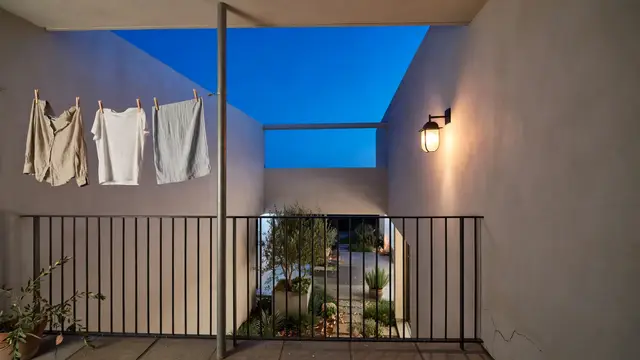
- The dryer. Clothes hang outside or by a window. Test: hang washing for one week. If it never fits, you found the real limit of your space.
- The shared bathroom. Wet and dry stay in separate places. Test: use a tray to keep wet cups and soap on one side of the sink and everything dry on the other.
- The big wardrobe. A closet is part of the wall, so the room keeps its width. Test: measure the depth of your wardrobe. What is beyond arm's reach is storage you do not use.
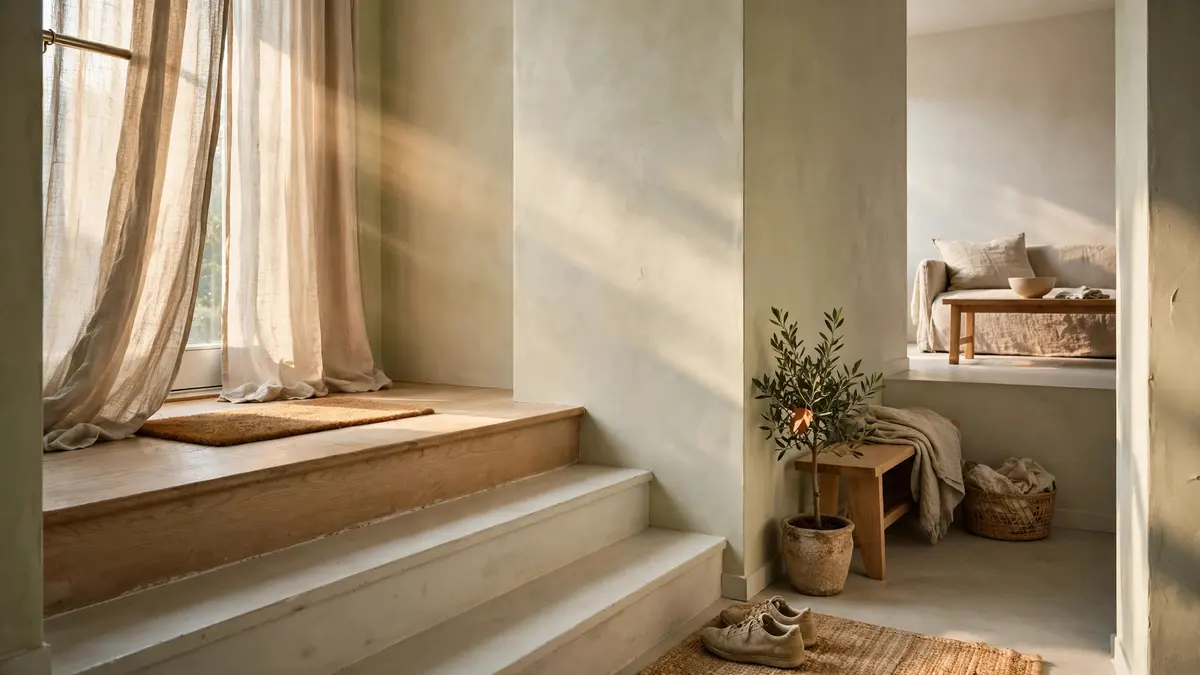
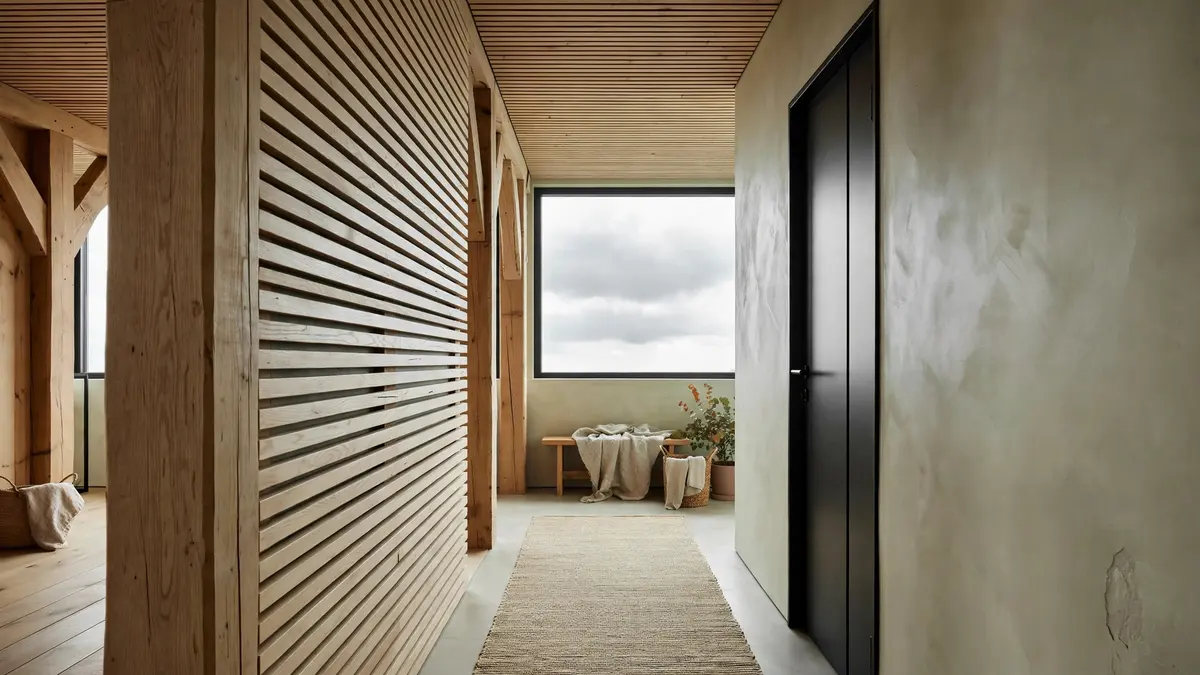
- Fixed walls. Sliding doors divide a room, so it is one room by day and two by night. Test: measure the swing arc of your bedroom door. If a chair, basket or rack sits in it, move it.
- Bulky furniture. Low tables and floor cushions keep sightlines open. Test: stand at the door and see how much of the far wall you can see. Whatever blocks it is the first thing to lower or remove.
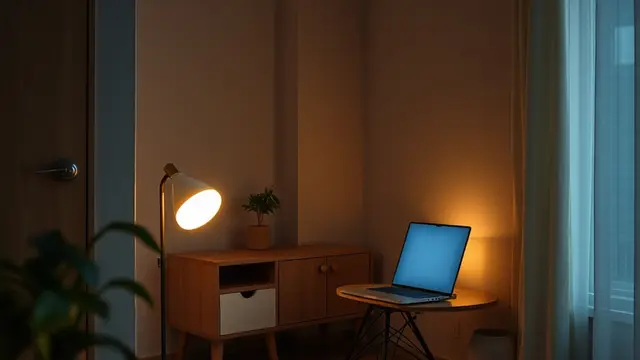
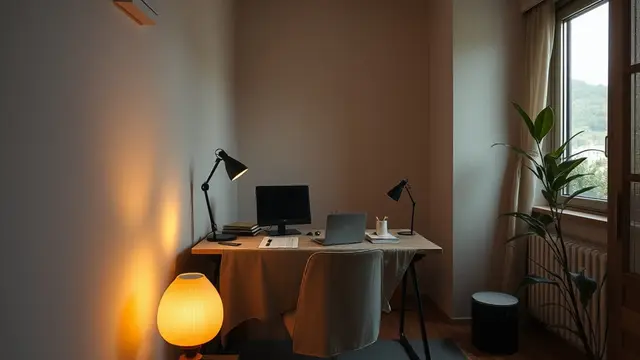
- Harsh light. Paper screens spread the glow. Test: switch off the ceiling light for an evening and place one low lamp near a wall.
- Decoration everywhere. One alcove holds one object. Test: keep one object on one shelf, move the rest to a box and look for a week before deciding.
- Bright colour. Colour comes from a plant, a cloth or a piece of wood. Test: remove every coloured throw and cushion except one. Does the room feel louder or quieter?
If you rent or share
Renting: start with the shoes, the light and the swing arc. They cost nothing and do not touch the walls. Living with others: agree on one room that gets the rules and let the rest of the house run as it does.
For the shoe line in detail, see japandi entryway ideas.
What to look for
As an Amazon Associate I earn from qualifying purchases. These links open Amazon search results; we may earn a commission at no extra cost to you. You do not need to buy anything to use this guide.
- Closed shoe cabinetKeeps shoes off the floor and out of sight.Search on Amazon
- Floor mattressThe bed that folds away.Search on Amazon
- Clothes drying rackReplaces the dryer corner for a week test.Search on Amazon
- Paper lampSpreads light instead of flattening the room.Search on Amazon
- Wall hooksGets bags off the floor without drilling.Search on Amazon
Save these ideas

Images in this guide are AI-generated illustrations of the ideas described, not photographs of real homes.