Layout & Small Spaces
Six Rules for a Calm Rental: What to Do First, Second and Third This Weekend
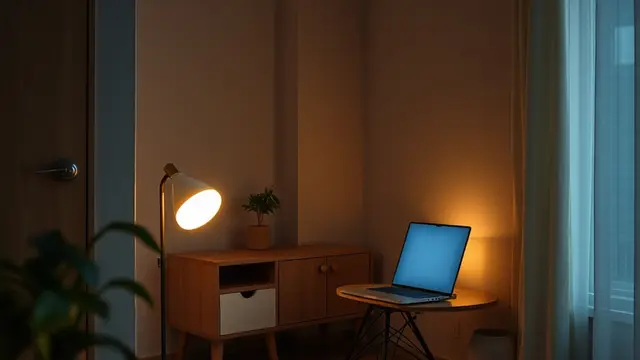
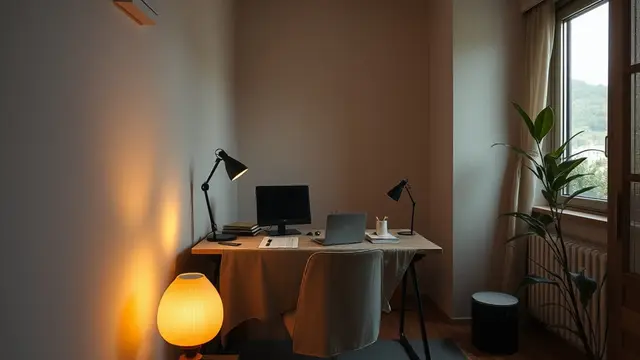
Shoes by the sofa, a laptop on the bed, a TV that creeps louder. Six physical rules, one weekend order of work, and everything works in a rental with a mat, a tray, a lamp and a curtain.

Shoes by the sofa, mail on the chair, and still no calm. You bought the oak shelf, the linen throw and the quiet beige paint. It still feels staged, a showroom nobody lives in.
Everything matches, so nothing is wrong, and your eye still finds nowhere to rest. Upstairs the bed holds a laptop and a laundry pile. Downstairs the television creeps up a notch every evening. In a rented studio the bed, desk and dinner table sit a few steps apart.
Different rooms, one cause: no rule for what belongs where. An old Japanese room looks nearly empty, yet every part has a job. That calm is a short list of rules about what goes where, what stays out and what leaves each night. Here are six, each one tied to one spot. Each has a deeper guide if you want the full method.
Watch the video version

Prefer to watch? The full walkthrough is on our YouTube channel. Subscribe for a new room guide every week.
Rule 1: Give the door a line
A Japanese entrance has its own small zone and one step marks where outside ends. You cannot pour a step into a rental floor, so draw one: a flat woven mat just inside the door with a tray on it. Shoes stand on the mat and nothing else does. Beside it, one lidded bench or closed cabinet for coats and bags, one hook for today's coat and one small warm lamp. If it has no place by the door, it does not come in. Full setup: the drop zone guide.
Rule 2: One job per surface

Your bed probably works five jobs: office, sofa, laundry shelf, cinema and place to sleep. Move work, scrolling and folding to a chair, table or another room. Give the clutter its own closed home, such as a wardrobe shelf or lidded box. Keep the bedside to a lamp, a glass of water and one book, and charge the phone in the hallway for a week. If you lie awake, get up and sit in a chair elsewhere until you are sleepy. See the one-object bedside rule.
Rule 3: Soften what rings
Two bare walls facing each other bounce sound back and forth, so every word arrives twice. Clap once in the middle of the room. A short dry snap means the room is soft, and a ringing tail means it is hard. Fix it with soft, thick things: a large rug running under the front legs of the sofa, heavy linen curtains wider than the window, and a bookshelf with uneven spines. Stop before every wall is padded, because a dead room sounds strange. The method is in how to reduce echo.
Rule 4: Divide with a rug and a curtain
In old Japanese rooms a rail runs above and a groove runs below, so the room's edge is drawn in the ceiling and the floor, not built between. Copy the line: a rug on the floor and a curtain on a track or tension rod directly above it. Same footprint, no building. Use a three-panel screen if you cannot drill, and skip the tall bookcase that blocks the window. More options in the studio divider guide.
Rule 5: Let a lamp switch the mode
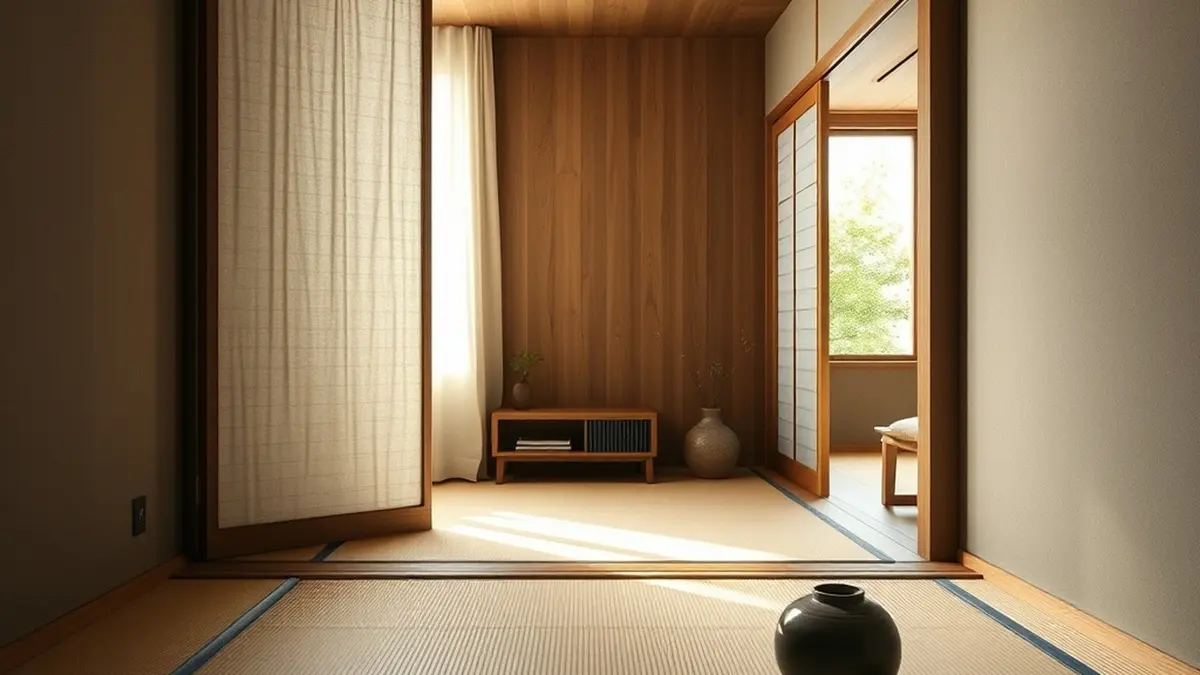
At the end of the day, draw the curtain across the work corner, close the laptop behind it and cover the keyboard with a plain cloth. Write tomorrow's first task on a sheet and put it in a drawer. Then swap lamps: the bright desk lamp off and the warm bedside lamp on. Turn the ceiling light off after dinner and use one lamp low and one at eye height. The dark between the pools gives the room depth. Details: lamp pools, not floods.
Rule 6: Reset the floor every morning
Open the window, make the bed, put the throw away and let the floor be bare. The reset makes the room feel calm more than any object does.
The weekend order of work
- Saturday morning: rule 1 (mat, tray, hook) and rule 2 (clear the bed and bedside).
- Saturday afternoon: rule 3 (rug and curtain) and rule 4 (the line).
- Saturday evening: rule 5 (ceiling light off, two lamps).
- Sunday: run rule 6 once and see what is still on the floor.
What to look for
As an Amazon Associate I earn from qualifying purchases. These links open Amazon search results; we may earn a commission at no extra cost to you. You do not need to buy anything to use this guide.
- Heavy-duty tension rodHolds light linen across an alcove.Search on Amazon
- Linen-blend curtainsSoften sound and light.Search on Amazon
- Large flat-weave rugOne soft plane under the furniture.Search on Amazon
- Small table lampA pool of light instead of a flood.Search on Amazon
- Warm dimmable bulbsCheck the box for a warm number.Search on Amazon
Save these ideas

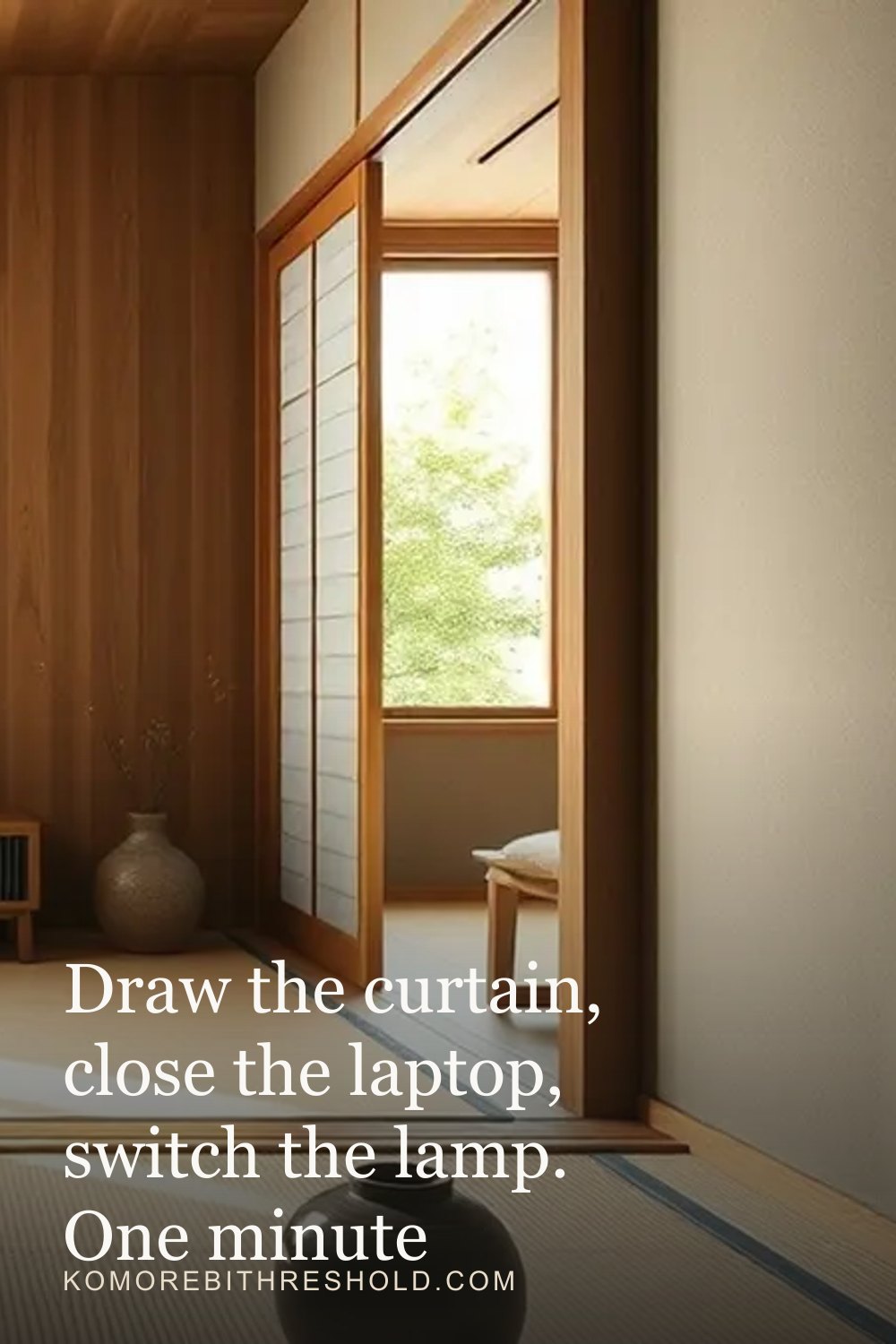
Images in this guide are AI-generated illustrations of the ideas described, not photographs of real homes.