Layout & Small Spaces
How to Divide a Studio Apartment Without Walls (Renter-Friendly)
One room doing everything? Skip the bookcase wall. Use a light-letting divider, rug lines and a two-minute evening switch to split work and rest. No drilling.
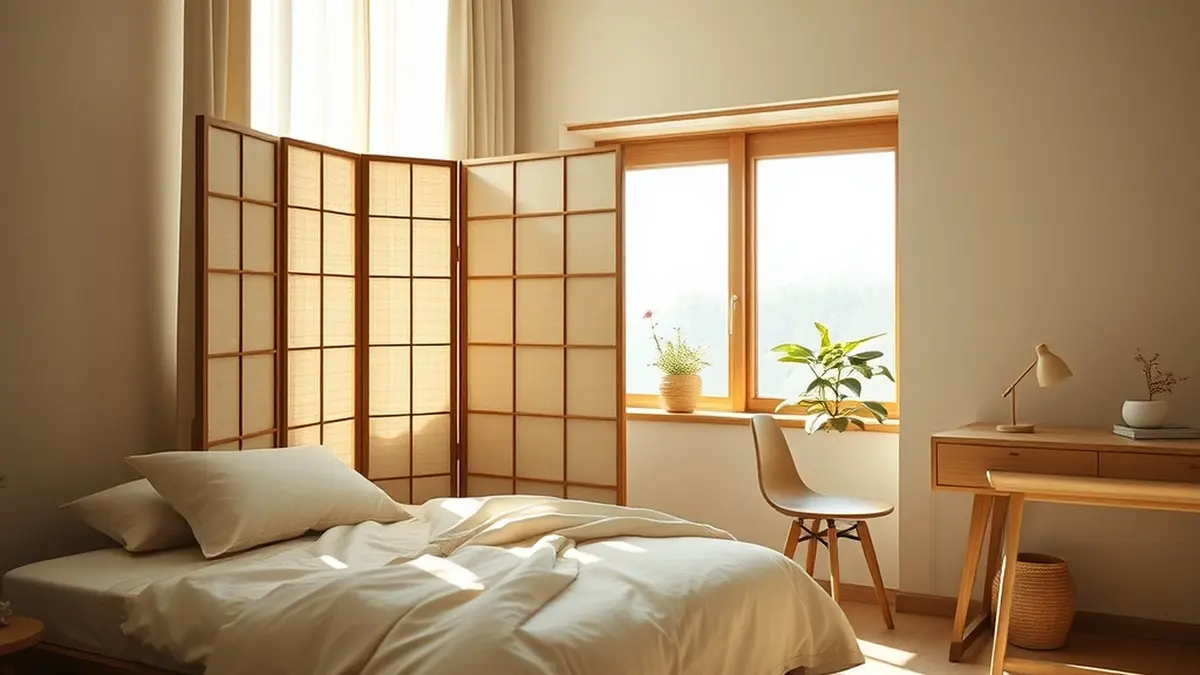
You have one room, and it has to do everything. You wake up in the bed, work six feet away and eat dinner next to both. At six you close the laptop, but the desk is still there, a few steps from your pillow, looking back at you.
Most advice says to build a barrier: a tall bookcase, a heavy curtain, a wall of boxes. That usually makes the room darker, not calmer. Japanese homes handled one-room living for centuries without walls. This guide shows the idea and three renter-friendly fixes you can finish in a weekend.
Watch the video version

Prefer to watch? The full walkthrough is on our YouTube channel. Subscribe for a new room guide every week.
Why a studio needs modes, not walls
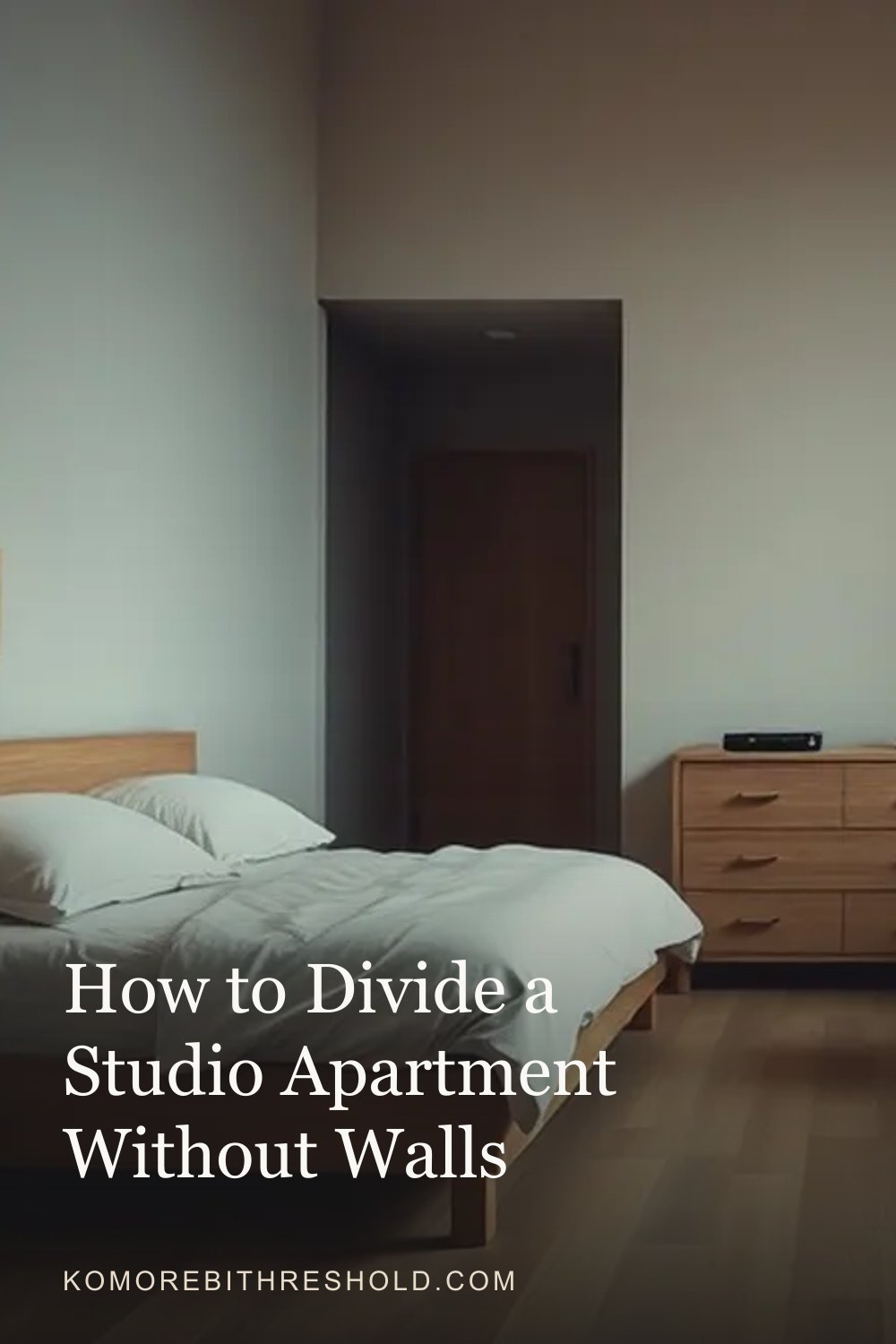
Run a quick test. Look at the room from your bed. If the desk, the dishes and the door are all in view, nothing in the room ever changes, so nothing tells you work is over.
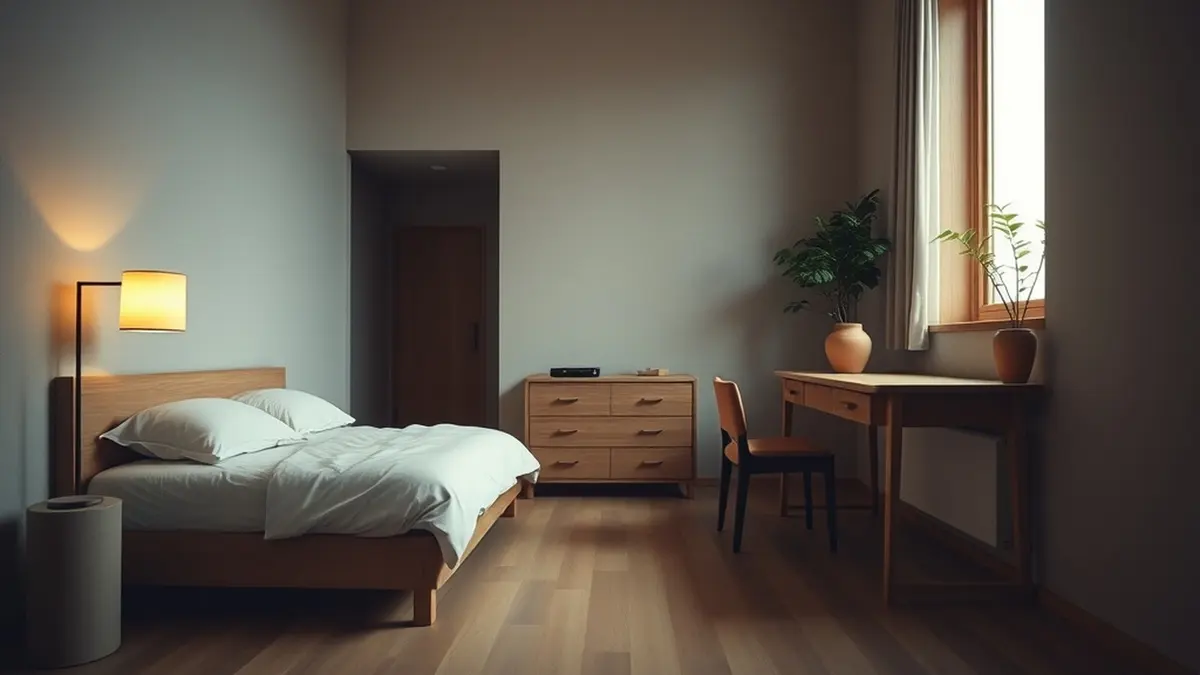
When work and home share one space, you have to build the boundary yourself. The problem is not privacy from a wall. It is giving each part of the day its own start and its own end.
How Japanese rooms changed their jobs
A typical Japanese room is made of three things: tatami floors and two kinds of sliding panel.
- Fusuma are opaque sliding screens. They close a large space into smaller rooms and double as closet doors.
- Shoji are translucent. The paper lets light spread softly while holding back glare and draughts.
Both slide on a rail at the top and a groove at the bottom, and both are light enough for one person to move. Slide them shut and you have two rooms. Slide them open and you have one large room again. A wall decides once, for years, what a room is. A screen lets you decide again every day.
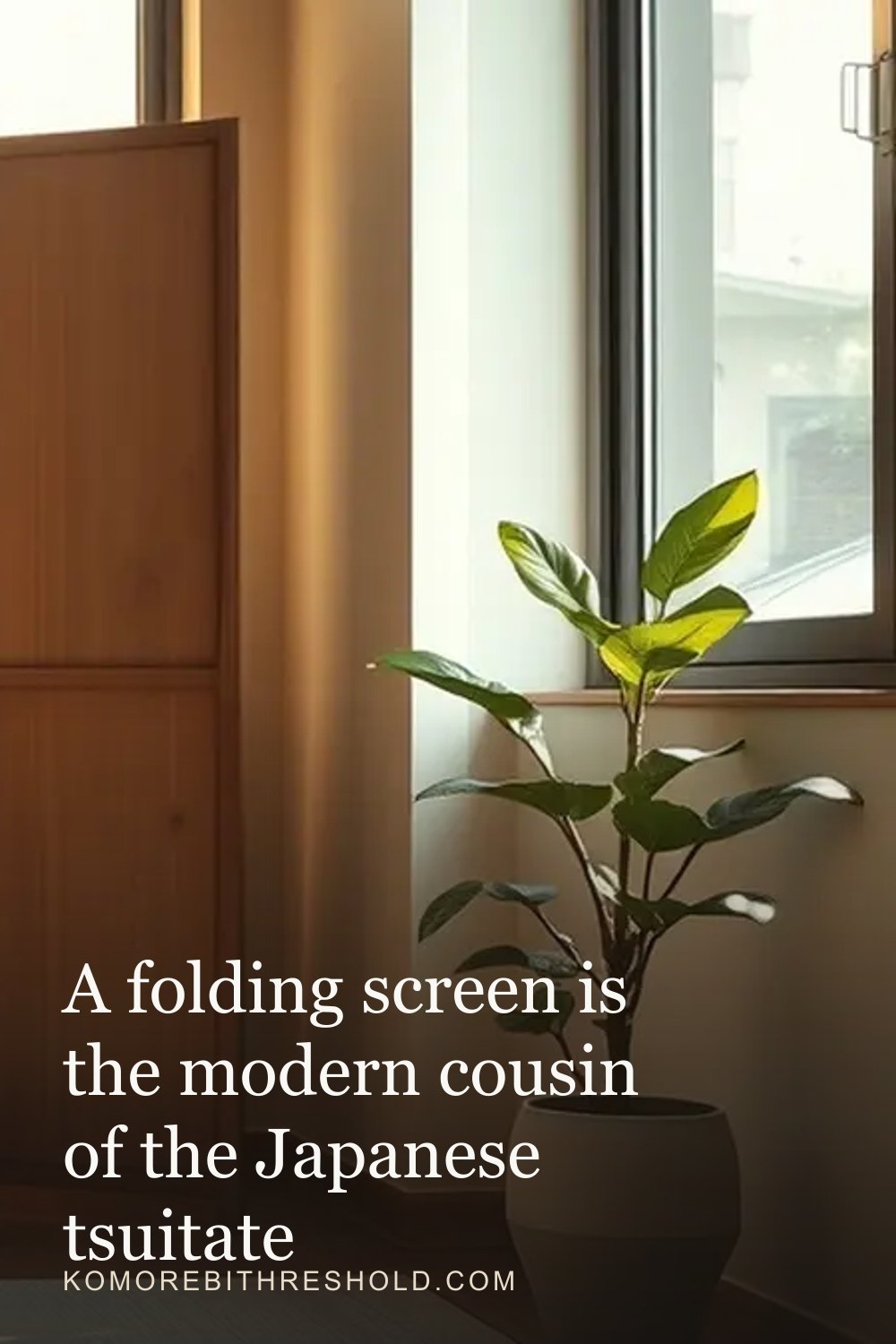
There were also free-standing partitions, a single panel on feet, usually wood framed and covered in cloth or paper. That is exactly what a renter can use: no rails, no drilling, and you can move it tomorrow.
An honest warning: screens like these do not stop noise. They change what you see and feel, not what you hear, and that is fine for our goal.
Mistake 1: you built a wall instead of a boundary
The usual fix is a tall bookcase across the middle of the room. It splits the floor, but it also splits the light. The half of the room away from the window now lives in shadow, and you switch on the ceiling light at noon.
The rule: a divider should break the view, not the light. If the window glows through it, you did it right. A tall shelf, a wardrobe, a stack of boxes and a heavy curtain all block both.
Try this: stand by the window and look back into the room. If the far half is dim, the divider is a wall.
The opposite mistake matters too. A thin sheet pinned across the room sags, and soon you stop closing it. A boundary you stop using is worse than none. Choose something you will really slide every day.
Three dividers that let the light through
- A low open bookcase. Keep it below shoulder height and half empty. It splits the floor without splitting the light.
- A free-standing folding screen. Choose fabric or paper panels, not solid wood, and test it by holding a hand up behind it. Three panels zigzag and stand up by themselves.
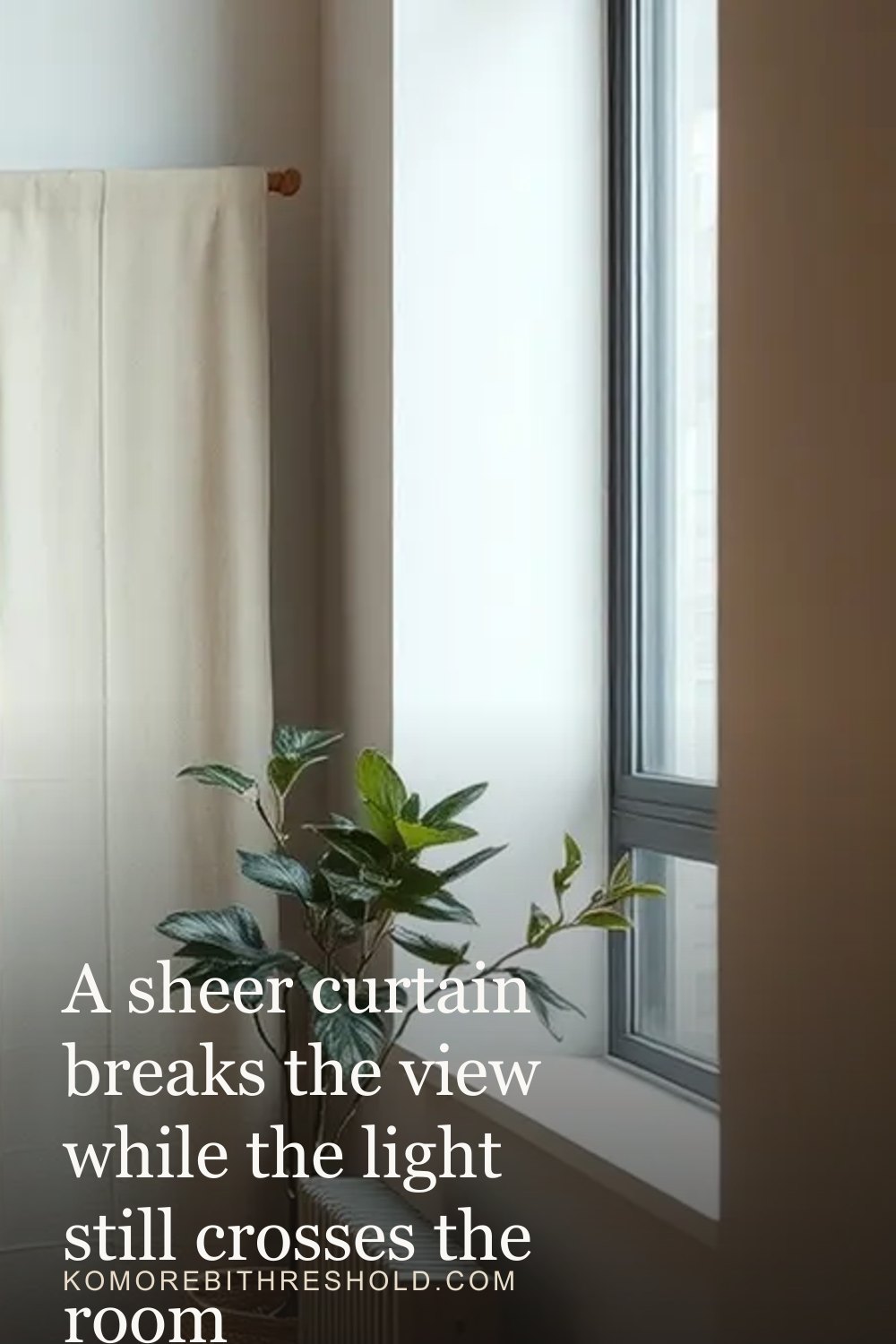
- A sheer or linen curtain on a ceiling track or tension rod. It is the closest thing to a shoji, and pulling it shut becomes your daily ritual.
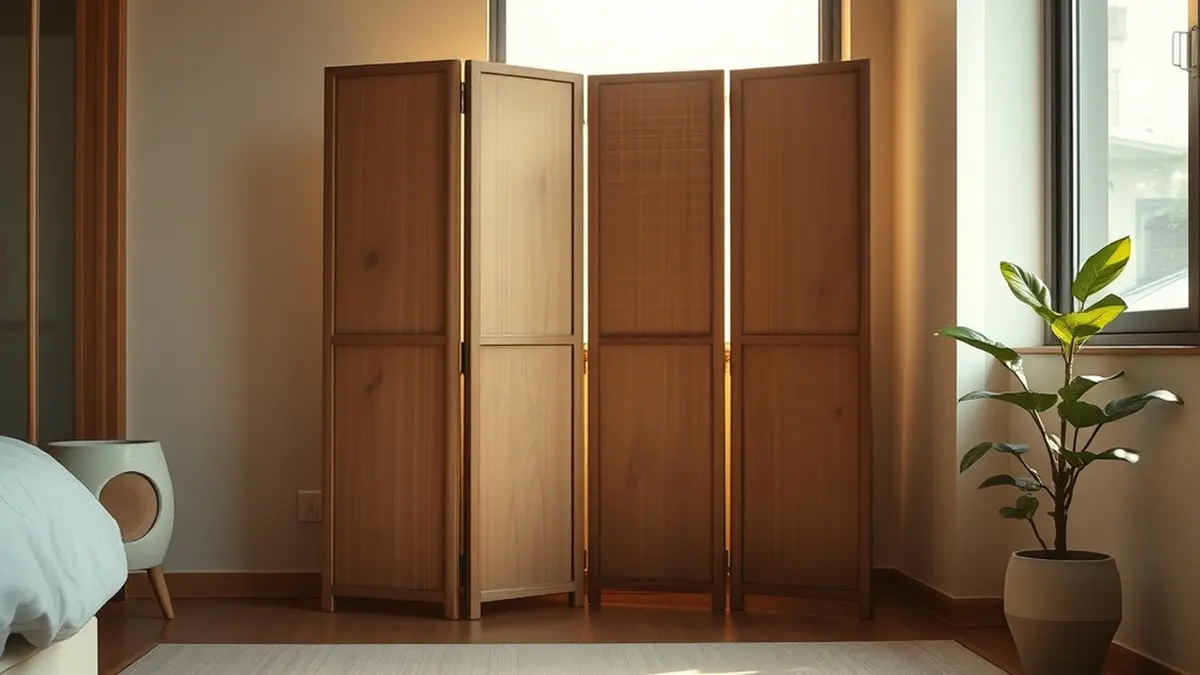
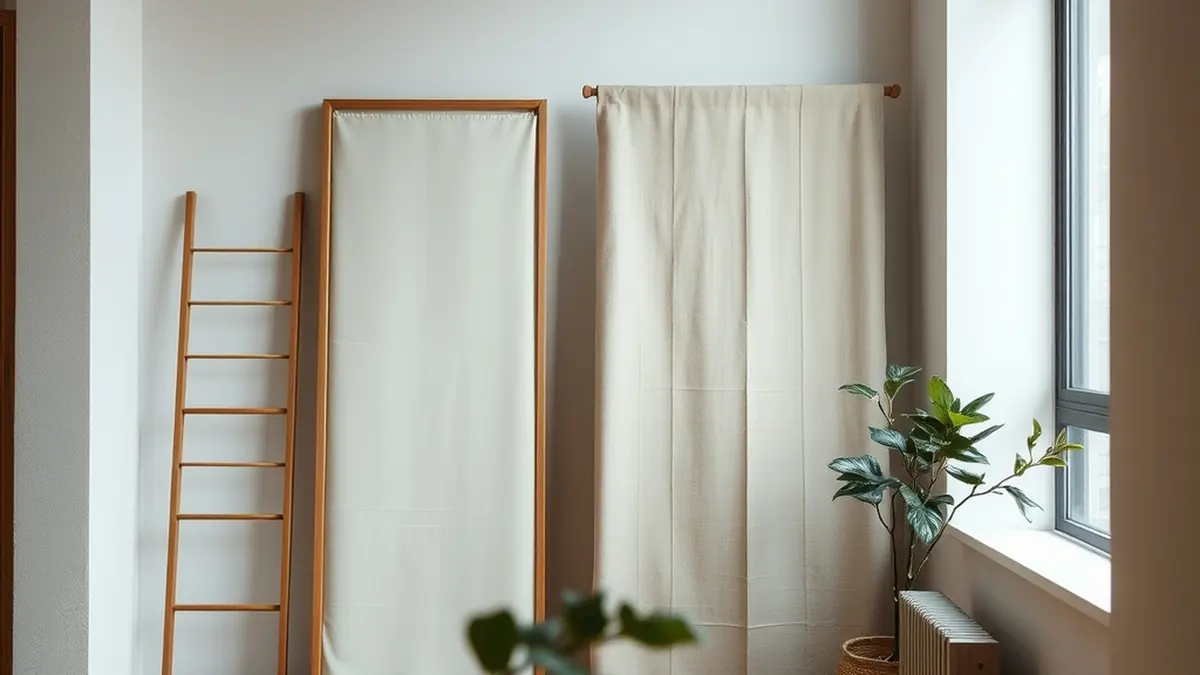
Practical notes: hang the curtain from the ceiling if your lease allows so it falls to the floor; a line that runs all the way down reads as a wall in the best way. Check the weight limit on any tension rod, never hang a curtain where it can touch a heater or block a fire exit, and keep the screen a hand's width from the window so air and light move around it. For a screen between bed and desk, a little above eye level makes the other zone disappear.
Mistake 2: nothing says the workday is over
Everything stays exactly as it was, so you never really leave. Mentally leaving work in the evening is called detachment, and research on it links more detachment in off-hours with less strain and more life satisfaction. These are links, not proof of cause, but they are a good reason to take the switch seriously.
A Japanese screen is a built-in ritual: you slide it shut, the room becomes a different room and your hand feels the change. In a studio you need a small, repeatable act that does the same job.
Build a two-minute mode switch
- Close the screen. Fold the laptop and also pull the curtain or slide the panel so the desk is out of sight.
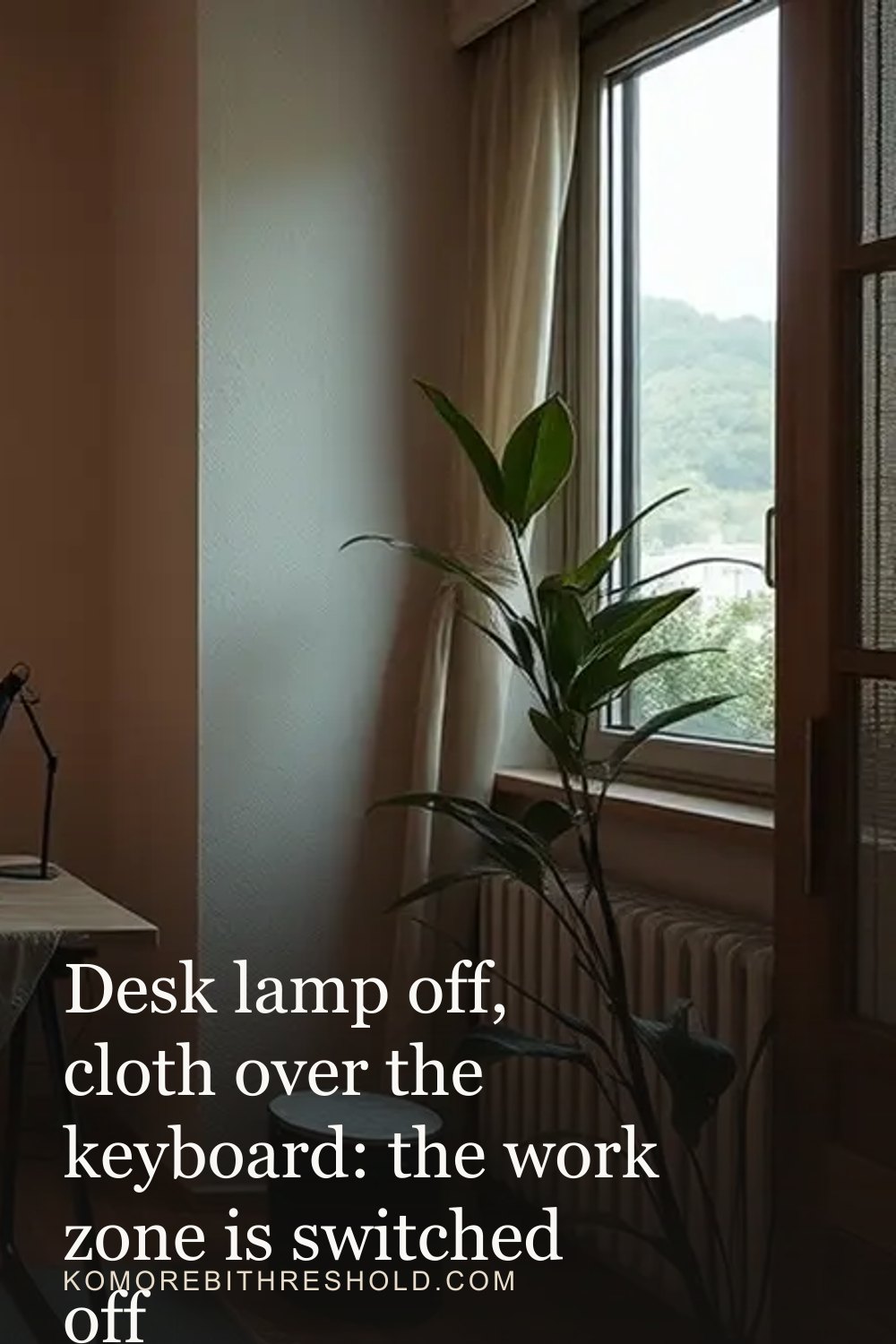
- Cover the tools. A linen cloth over the keyboard or a lid on a box turns a work desk into a plain table.
- Change the light. Switch off the desk lamp and switch on a warm one so the room looks different.
- Park tomorrow's first task. Write it on paper, then put the paper away so the job is parked, not hanging in your head. (This last step is our suggestion, not a study result. Keep it only if it helps.)
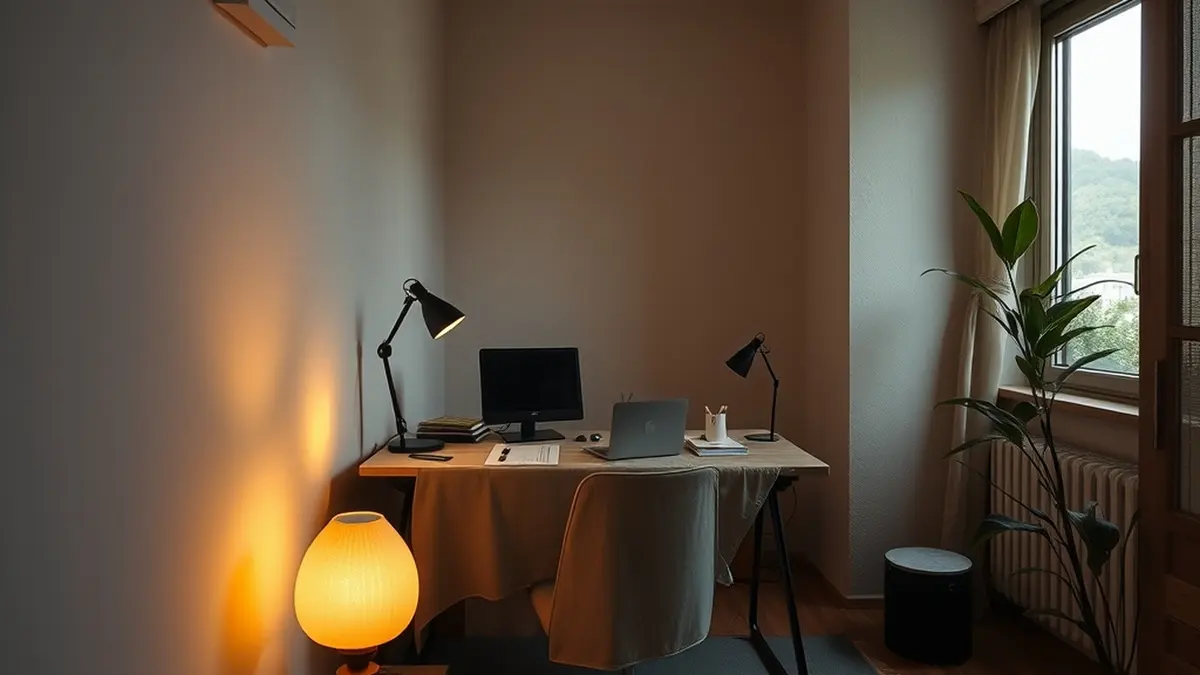
Do it at the same time every evening so the time itself becomes part of the signal, and reverse it in the morning: open the screen, uncover the desk and switch on the bright lamp so work starts on purpose. Keep the routine under two minutes, or you will skip it on the evenings you need it most. If you skip it three evenings in a row, make it shorter, not stricter.

Mistake 3: you divide the studio with furniture alone
A sofa back, a desk and a bed pushed into corners say what each zone is for, but not where it stops. Your eye reads the whole room as one crowded space.
A Japanese screen slides on a rail above and a groove below, so the boundary is simply a line. You can copy both lines:
- Floor line: a rug is the cheapest boundary there is. Put the bed or the desk on one and the zone has an edge you can see. Use a soft rug on the sleeping side and bare floor or a flat weave on the work side.
- Ceiling line: a curtain track or hanging rod marks the upper edge.
- Height change: keep furniture in the sleeping zone low and the work zone upright, so the two sides feel different.
In a very small room pick two lines, not three. A rug and a curtain are enough, and extra layers only add clutter. If the studio is long and narrow, divide across the short side so you get two squarer zones instead of a corridor.
A one-weekend plan
- Friday evening: clear the sightline from bed to desk. Move laptop and paperwork to the work zone and decide where the divider will go.
- Saturday morning: put up the divider, using a screen you already own where possible.
- Saturday afternoon: lay the rug lines. One rug under the bed or desk, one change of texture, nothing blocking the exit.
- Sunday evening: do the mode switch once, slowly: close, cover, light, park the task.
Then live with it for a week before you buy anything else. A studio usually needs one good change, not ten small ones. If the room still feels crowded, check the light first, and ask whether your divider lets it through and your rug shows a clear edge.
Frequently asked questions
Can I divide a studio without drilling?
Yes. A free-standing folding screen, a low open bookcase and a tension rod with a curtain all work without drilling. Check your lease before hanging anything from the ceiling.
Will a screen block noise?
Not much. Screens change what you see, not what you hear. If noise is the problem, that is a different fix.
Where should the bed go in a studio?
Keep it out of the sightline from the desk, and keep the bed for sleep and rest. Move the laptop, snacks and paperwork to the other zone.
What to look for
As an Amazon Associate I earn from qualifying purchases. These links open Amazon search results; we may earn a commission at no extra cost to you. You do not need to buy anything to use this guide.
- Three-panel folding screenPick fabric or paper panels so light still passes through.Search on Amazon
- Sheer linen curtain panelsHang from a ceiling track so the divider reads as a soft wall.Search on Amazon
- Tension curtain rodWorks in a doorway or alcove without drilling. Check the weight limit.Search on Amazon
- Flat-weave area rugA rug marks the floor line of a zone and shows a clear edge.Search on Amazon
Save these ideas

Images in this guide are AI-generated illustrations of the ideas described, not photographs of real homes.