Quiet & Light
Your Home Isn't Noisy, It's Echoing: How to Reduce Echo at Home
Raising your voice at dinner and blaming the street? Your room may be echoing. Do the 3-second clap test, then use these 7 fixes to soften a ringing room.

You raise your voice at dinner and the television creeps louder. By evening you are tired and you blame the street. But often the room itself is the problem: sound that is already inside bounces from surface to surface and refuses to die. That is echo, not noise, and it is something you can fix from inside your own walls.
This guide gives you a three-second test to tell the two apart, the simple reason hard rooms ring, and seven steps that soften a room without turning it into a padded cell.
Watch the video version

Prefer to watch? The full walkthrough is on our YouTube channel. Subscribe for a new room guide every week.
Do the clap test first
Stand in the middle of the room, clap once, sharply, and listen to what follows.
- A short, dull clap means the room is soft enough. Nothing to do.
- A clap that hangs in the air means the room is bare and hard.
- A quick metallic buzz, like a tiny ping-pong game between two walls, is a flutter echo. It shows up between two flat, hard, parallel walls.
If the clap rings or buzzes, the room is part of your problem, not just the street. The clap test is a rough guide, not a measurement, but it is good enough to compare before and after.
Noise and echo are different problems
People mix these up, so separate them early.
- Noise comes in from outside through walls, windows and floors. A neighbour's drill is noise. Only mass and airtight construction stop it, and that is a job for a builder.
- Echo is sound already inside the room. You can hear it in an empty room. It is a job for softness and texture, and for you.
Soft furnishings will not stop a loud party next door. They will make your own room kinder to a voice.
Why hard rooms ring
Sound spreads from your voice like ripples in a pond. When the ripples reach a wall they bounce back toward you. Hard, flat surfaces such as glass, tile, polished plaster and bare floors send most of that sound back into the room. Soft, thick, uneven surfaces such as curtains, rugs, upholstery and books take some of it in.
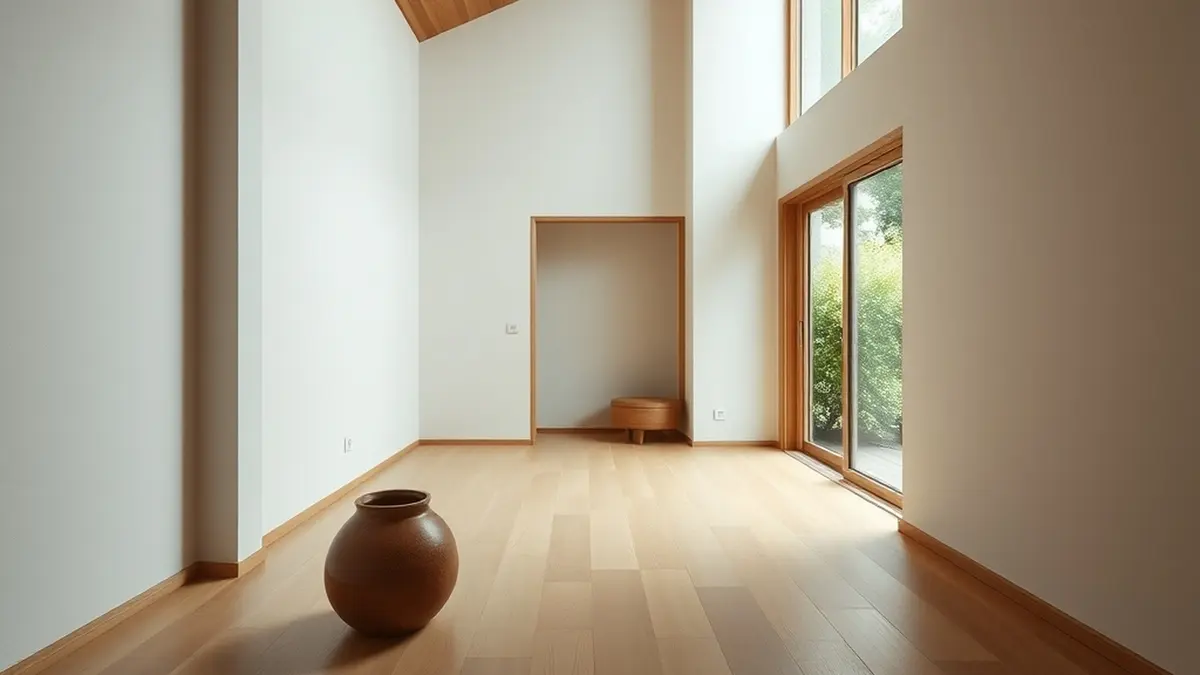
Two more things make a room ring:
- Volume. A big, tall room holds sound longer than a small, low one. The same amount of soft material does less in a double-height space than in a cabin.
- Smooth, seamless surfaces. A sleek kitchen, a glass wall and a polished concrete floor all look calm and all hand your voice straight back to you.
Every spoon, chair and footstep lasts a little longer than it should in a ringing room. By evening that piled-up sound feels like tiredness.
What a Japanese room does differently
A traditional Japanese room is almost empty and still quiet. The reason is not emptiness. It is that the emptiness is lined with soft, thick, absorbent materials: a woven rush floor, walls of paper and plaster, a timber ceiling. Very little is hard and shiny enough to bounce sound straight back. Measurements of floor materials have found that tatami absorbs sound more evenly across low and high pitches than many carpets do.
Notice what that room does not do. It does not try to keep sound out; thin paper screens would not stop a voice. It deals with what happens to sound once it is inside.
You can borrow the recipe without a single tatami mat: a soft floor, fewer hard surfaces facing each other, and furniture that gives. A quiet room and a silent room are not the same thing. The aim is a room that lets a sound arrive, be understood and then go.
Seven steps to a calmer-sounding room
Do them in this order and clap again after each one.
- Hang one thick curtain on the bare wall facing your clap. It is the fastest fix and shows you the difference at once.
- Start with the floor. It is usually the largest hard surface. Use a thick wool, jute or rush rug, and make it generous so it reaches under the sofa and chairs.
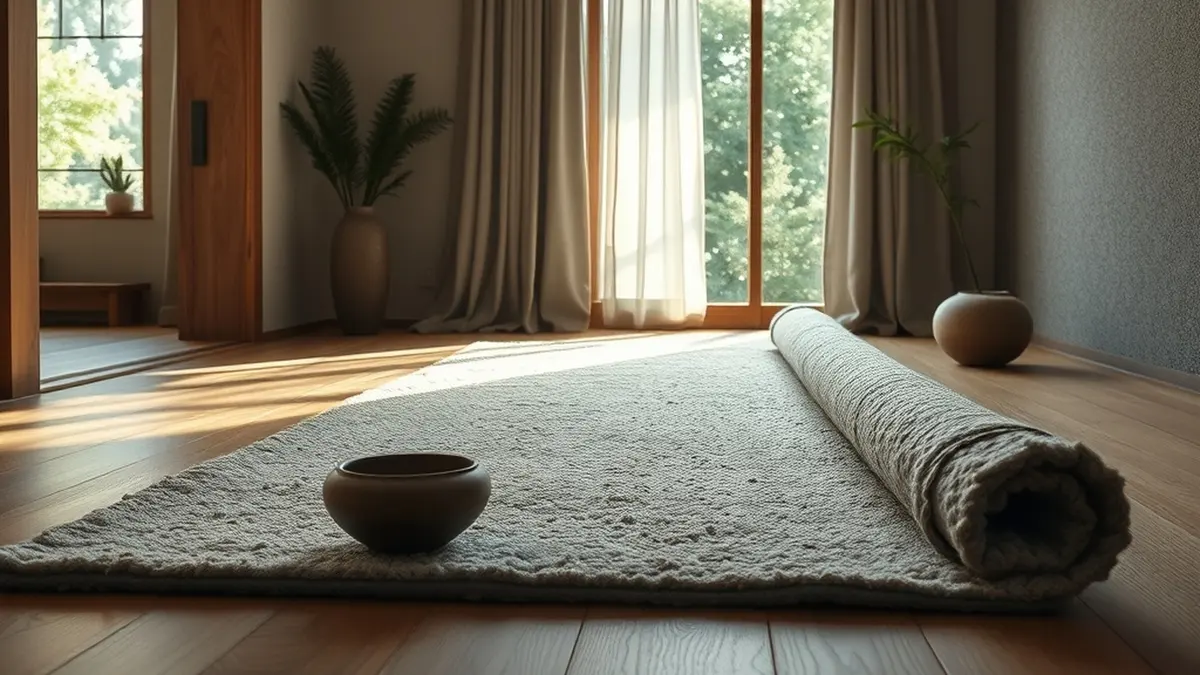
- Deal with the glass. Bare windows are a big hard surface. Heavy linen or wool curtains, hung wide of the frame so they fall in deep folds, add softness without hiding the view.

- Give one wall depth. A wall of real books, a woven hanging, hand-troweled plaster or timber slats with something soft behind them. Choose the wall that faces your sofa, or the one your voice hits when you sit at the table. Uneven surfaces scatter sound instead of sending it straight back.

- Let furniture help. An upholstered sofa, a bed with soft bedding and a thick armchair all take in sound and cost nothing extra. In sound terms, furniture is treatment, not clutter.
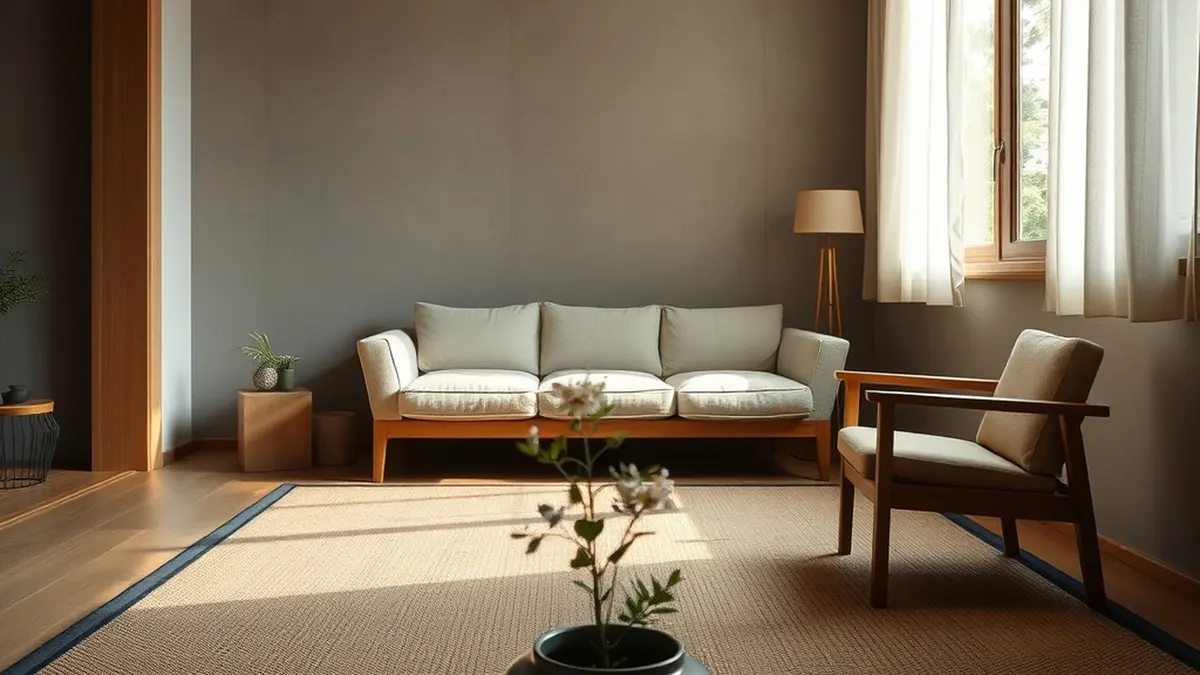
- Break up parallel walls. If the clap buzzes, put something uneven between the two flat walls: a bookcase, a deep shelf, a textured panel.
- Keep a little hardness. A stone threshold, a timber tabletop and a ceramic bowl give sound somewhere to sparkle. A room that absorbs everything is as tiring as one that reflects everything.

How to know when to stop
After each change, stand in the middle and clap again. Your ear is very good at noticing when the tail of a sound gets shorter. Stop when the clap dies quickly but the room still feels alive. That balance point is different in every home. A finished room lets sound leave the way light leaves at dusk: not in a snap, and not lingering.
If you can do only one thing this month, make it the rug. If you can do two, add curtains. A soft floor and a soft window can already change how a room feels.
Frequently asked questions
Will a rug really reduce echo?
Yes, a thick rug helps, because the floor is often the largest hard surface in a room. A small rug does little. Make it large enough to sit under the sofa and chairs.
Do curtains block noise from outside?
Not much. Curtains calm echo inside the room. Blocking outside noise needs mass and airtight windows and doors.
Should I cover every wall?
No. Soften the walls and surfaces your voice hits first, keep some hard details, and stop when the clap dies quickly but the room still feels alive.
What to look for
As an Amazon Associate I earn from qualifying purchases. These links open Amazon search results; we may earn a commission at no extra cost to you. You do not need to buy anything to use this guide.
- Large wool or jute rugA generous rug is the biggest single step. Look for a thick pile and a size that reaches under the sofa.Search on Amazon
- Heavy linen curtainsHang them wide of the frame so they fall in deep folds. Thicker fabric absorbs more.Search on Amazon
- Woven wall hangingGives a bare wall texture so sound scatters instead of bouncing back.Search on Amazon
- Felt or fabric acoustic panelsA low-effort way to break up a flutter echo between two flat walls.Search on Amazon
Save these ideas






Images in this guide are AI-generated illustrations of the ideas described, not photographs of real homes.