Bedroom
Why Your Bedroom Never Feels Restful (and 7 Japandi Fixes)
Your bedroom is also your office, closet and laundry rack. See how Japanese homes gave the bed a time, not a place, and use 7 Japandi steps to calm yours.
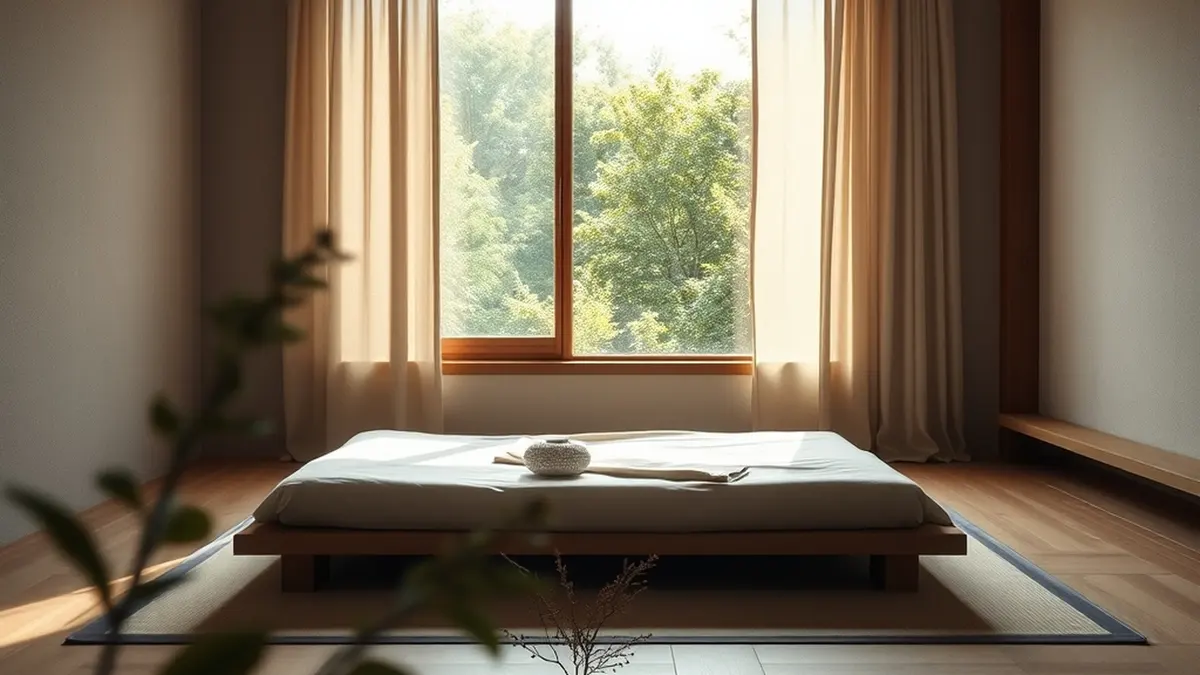
Your bedroom is also your office, your closet and your laundry rack. No wonder it never feels like rest. Tonight you will lie next to a laptop bag and a pile of clothes, and your head will stay at work. The mattress is probably not the problem.
Traditional Japanese homes had no bedroom at all. The bed vanished every morning. This guide shows what that did for the room, and gives you three rules and seven steps to copy in a normal bedroom.

Watch the video version

Prefer to watch? The full walkthrough is on our YouTube channel. Subscribe for a new room guide every week.
Why your bedroom feels like a workplace
In most modern bedrooms the bed arrives first and everything else is arranged around it. It takes the best wall and the best view. Then come the nightstands, a dresser, the chair that collects clothes, and somewhere in a corner a desk and a screen. Each object is reasonable. Together they use up the empty space that made the room feel like a place to rest.
Three things go wrong in a crowded bedroom:
- Proportion goes first. A room that could feel generous starts to feel fitted, with a narrow path around the bed.
- Materials stop being noticed. You cannot see the grain of a timber floor covered with things, or feel a plaster wall behind a wardrobe.
- Light has nowhere to land. A window that should wash a wall in the morning falls on a headboard instead.
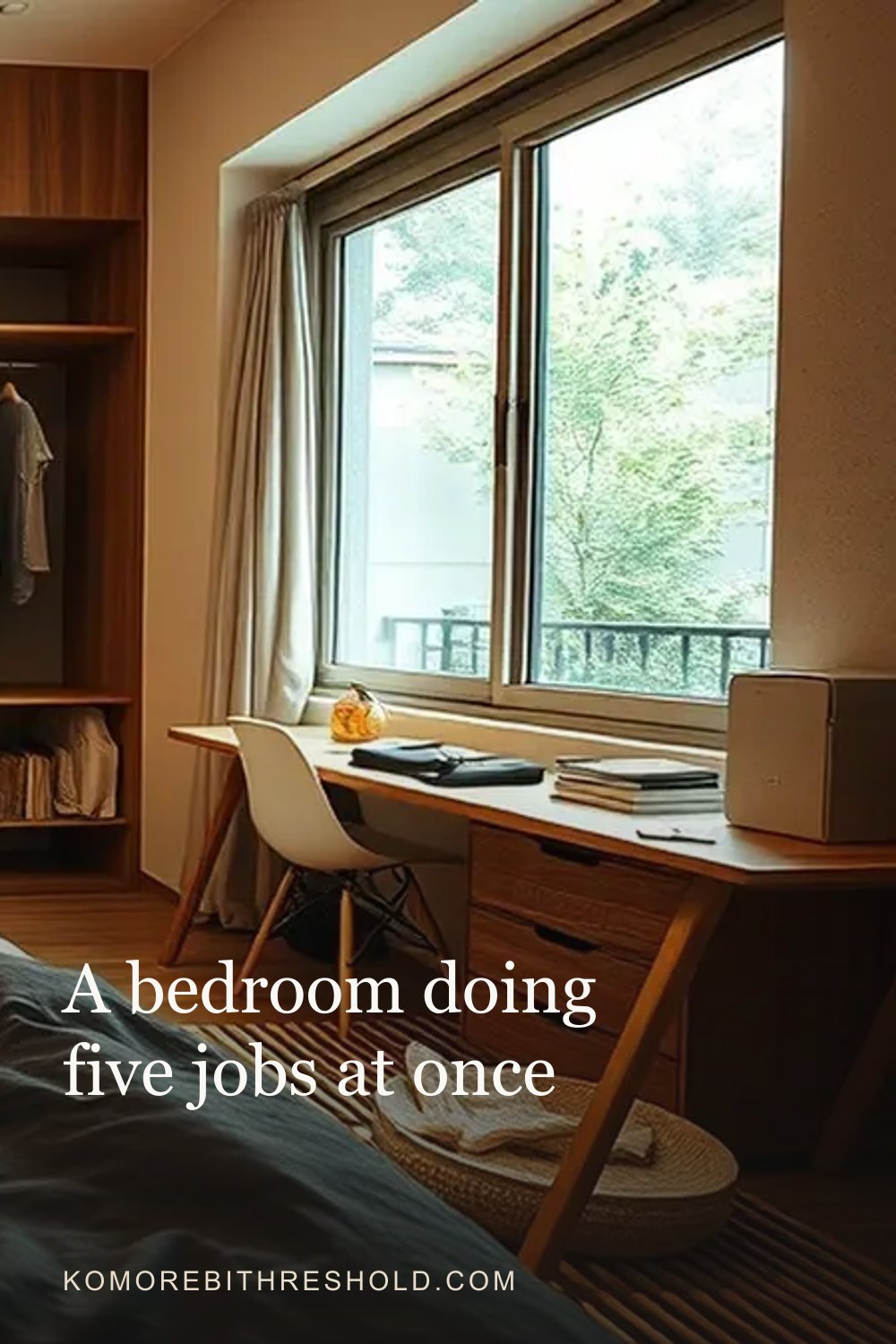
None of this is bad taste. It is what happens when one room is asked to do five jobs. We keep adding things because we have never practised taking them away.

The signal your bed sends
Sleep specialists describe the bed as a signal: if it keeps meeting you awake, working or scrolling, it can start to signal wakefulness. That idea comes from the way chronic poor sleep is treated, so treat it as a useful lens rather than a verdict on your bedroom. If you sleep badly most nights, please talk to a doctor. A calm room is not a substitute for that conversation.
What a room can do is remove the daily reminders that your bed doubles as a workplace. That part is entirely in your hands.
What a Japanese room did instead
By day, a traditional room holds a low table and a few cushions. There is no bed, no wardrobe and no dresser in sight. Sliding screens, called shoji (translucent) and fusuma (opaque), can close one large space into smaller rooms, so even the size of the room is a daily decision.

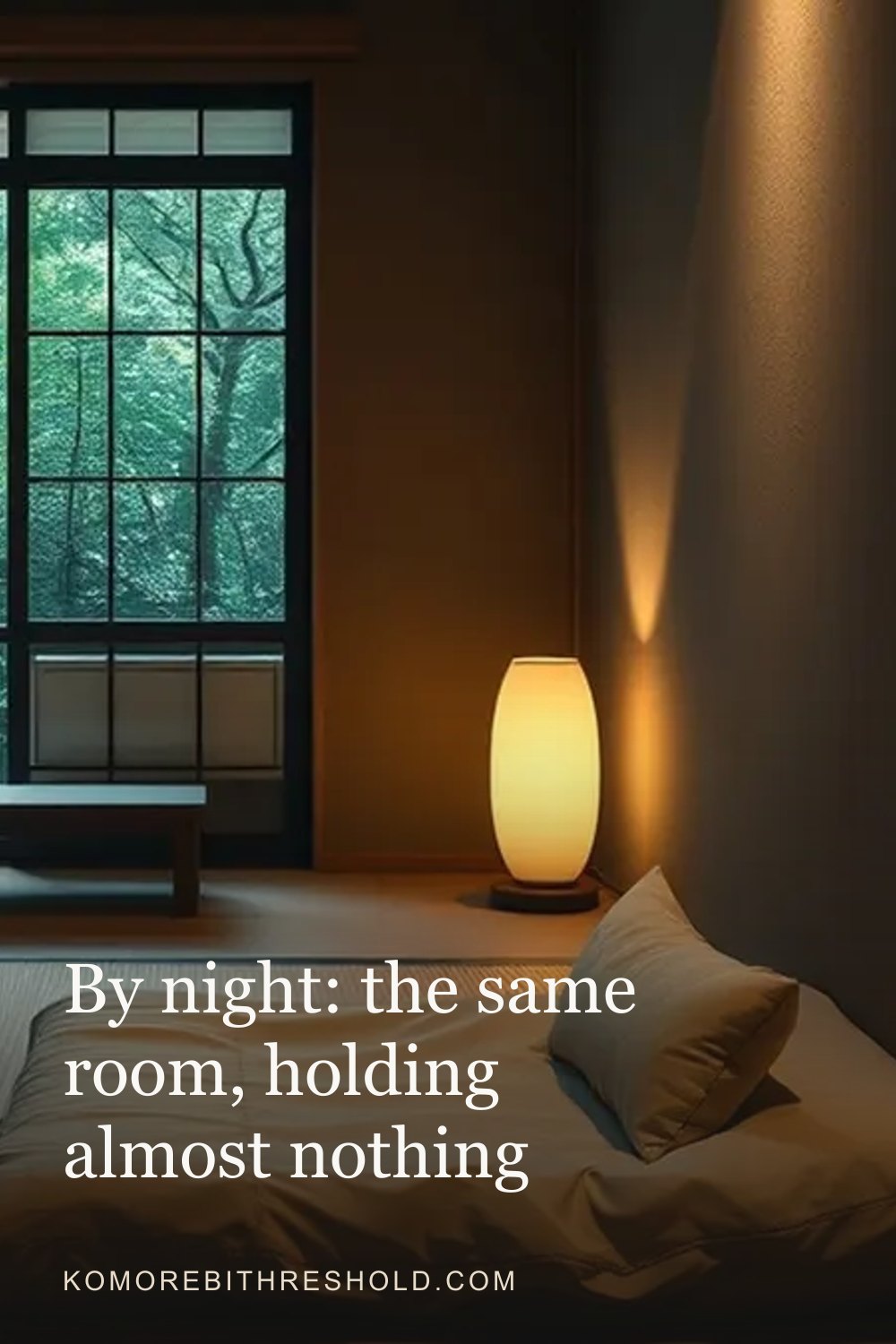
At dusk someone opens a closet and lifts out a futon, a thin mattress and a quilt, and lays it straight on the tatami. Within a minute the room has a new purpose. The low table is pushed aside, a lamp is turned down and the paper screens go quiet.
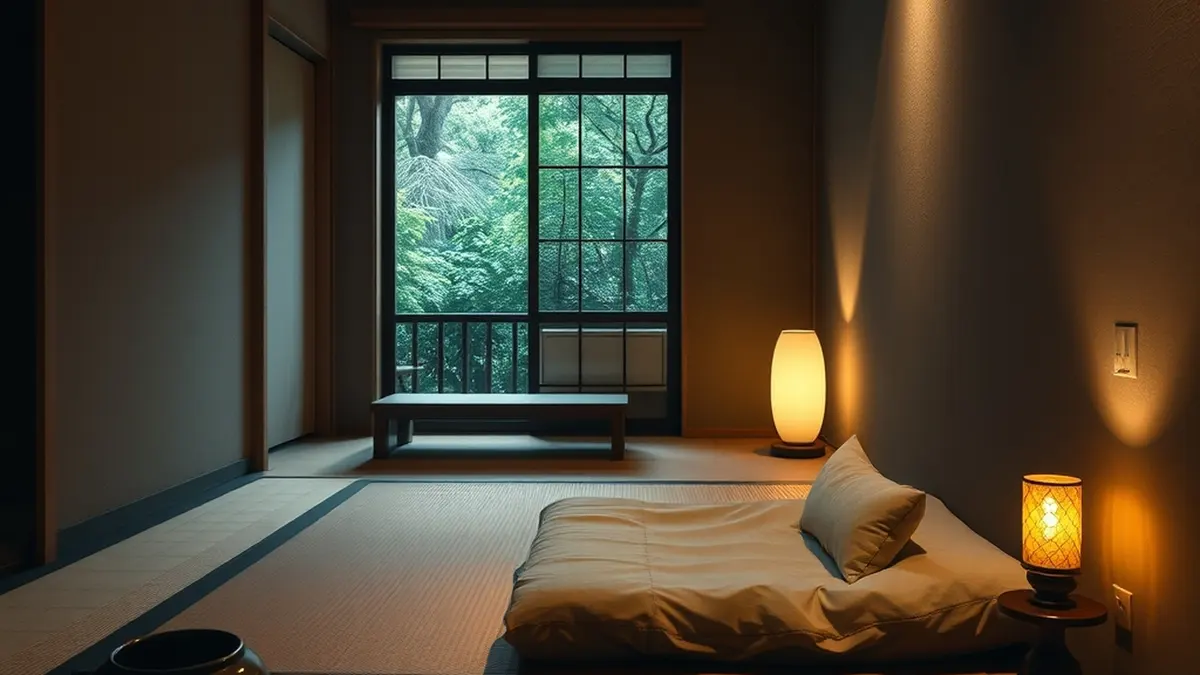
In the morning the bedding is folded in thirds and put away in a deep sliding cupboard called an oshiire. The floor is bare again before the kettle boils.
There is a practical reason. In a humid climate a mattress left on the floor all day grows damp, so airing and folding bedding kept mould and mites away. The empty room was a happy side effect.
To be honest about the history: the oshiire is not ancient, and many modern Japanese homes use real beds in Western-style rooms. The lesson is not that Japan solved sleep. It is that one way of living gave the bed a time, not a place.
Three rules for your own bedroom
- Remove the day jobs. If it does not help you sleep or rest, it lives somewhere else. That means the desk, the laundry and the charging station.
- Keep the bed low and the floor clear. A bed with legs and a frame takes up height as well as floor. Clear floor around it makes the bed look like a place of rest rather than a piece of furniture.
- Choose honest materials and soft light. Surfaces that are quiet to touch, to the eye and to the ear, and light that dims on its own.
Seven steps to copy
- Place the bed so you see the window. From the pillow you should see the window and some sky, not a wall of cupboards. Keep the wall behind your head plain.
- Keep it low. A platform or simple frame close to the floor keeps the ceiling feeling high and the walls tall.
- Build your own oshiire. A quiet wall of flat, handle-less doors that swallows everything you do not need turns storage into a calm surface.
- Let materials do the work. A timber floor, clay or lime plaster, linen at the windows and a wool or rush rug. Choose finishes that look better at the end of the day than at the start.
- Give the room a second place to sit. A reading chair by the window or a low bench, so wakefulness has somewhere to live that is not the bed.
- Leave the work out. No desk and no charging station by the bed. Let the room hold nothing that belongs to the day.
- Control light with the architecture. A layered curtain or screen, and warm low lamps in the evening. Windows decide how the morning arrives.
Keep ma beside the bed
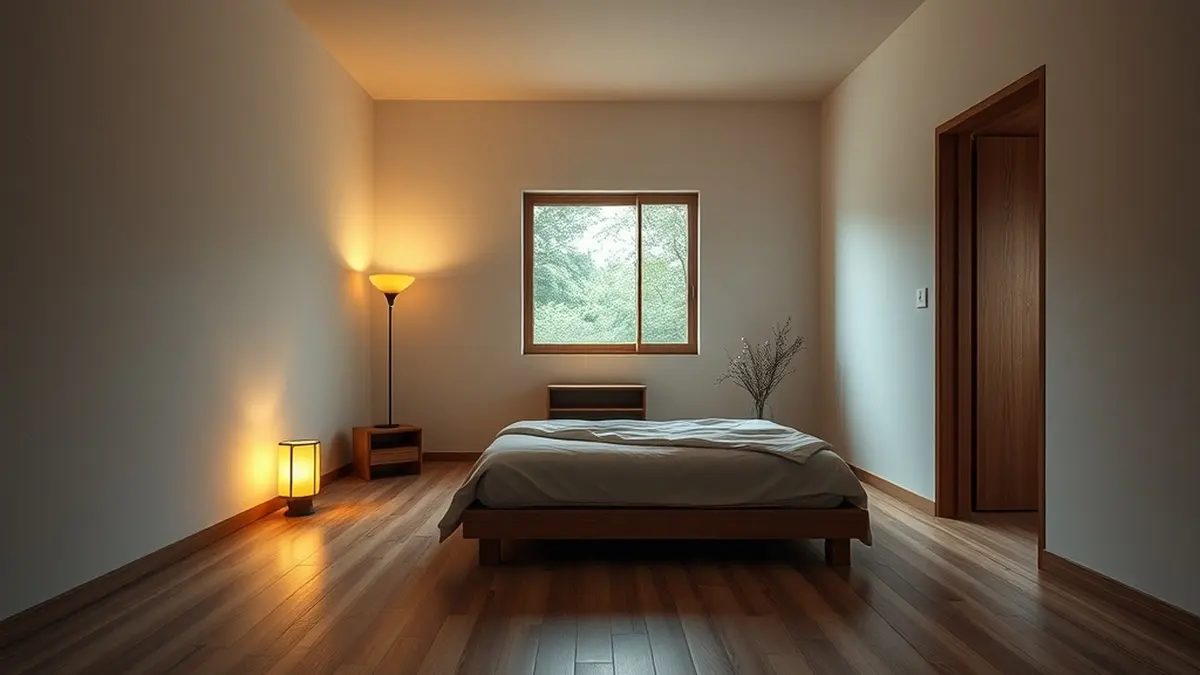
The Japanese word ma means the empty part of a room, and it is not wasted space. Leave a clear stretch of floor on at least one side of the bed and walk on it. If the room seems to breathe a little, you have kept enough.
Ma also applies to the bedside. A lamp, a glass of water and a single book is enough. Everything else belongs in another room. If the phone lives in the hall, you have to stand up to start your evening again, and that small distance is a gift.

Empty is not the same as calm
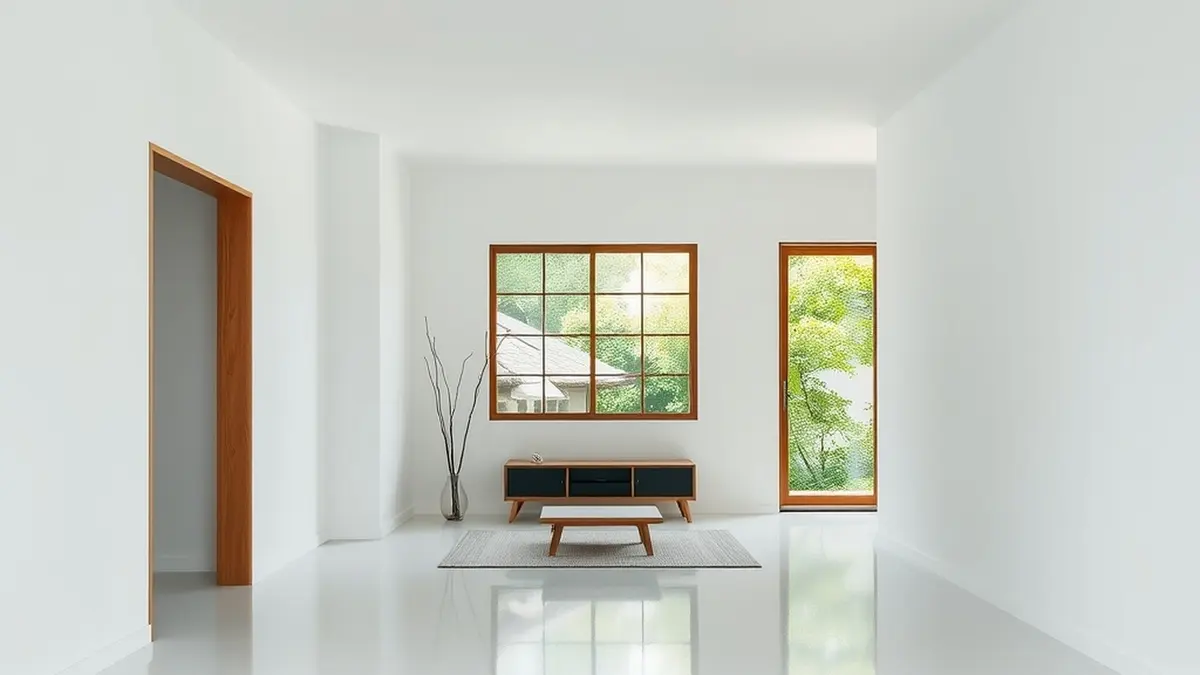
A bare room with cold, glossy surfaces is empty, but it has no ma at all. The Japanese room is calm because its emptiness is padded by woven rush, timber, plaster and paper.
If you cannot rebuild anything
Borrow the spirit. Take one thing out of the bedroom this week and one more next week. Keep notes on how the room feels over a month, the way a gardener keeps a notebook. Adjust slowly.
Frequently asked questions
Do I need a futon or a low bed?
No. The point is a clear floor and a bed that does one job. A low frame helps the room feel taller, but you can start by removing things.
Where should the desk go if my bedroom is also my office?
Put it where you can close or cover it at night: a closet-style desk with doors, or a folding table that stands in another room. Out of sight is the aim.
Will this fix my sleep?
We cannot promise that. A calmer room removes daily reminders of work. If you sleep badly most nights, speak to a doctor.
What to look for
As an Amazon Associate I earn from qualifying purchases. These links open Amazon search results; we may earn a commission at no extra cost to you. You do not need to buy anything to use this guide.
- Low platform bed frameKeeps the ceiling feeling high and clears the floor around the bed.Search on Amazon
- Warm bedside lamp (2700K)Low, warm light lets the room dim in the evening.Search on Amazon
- Linen curtainsA soft layer at the window that mutes morning glare.Search on Amazon
- Flat-front storage cabinetHandle-free doors turn clutter into a quiet wall.Search on Amazon
Save these ideas






Images in this guide are AI-generated illustrations of the ideas described, not photographs of real homes.