Entryway
Shoes Everywhere: A Shoe Limit and a Wet Boot Tray for Winter
Shoes spill across the floor when the shelf holds fewer than the household owns. Set a shoe limit per person and add a tray for wet winter boots.
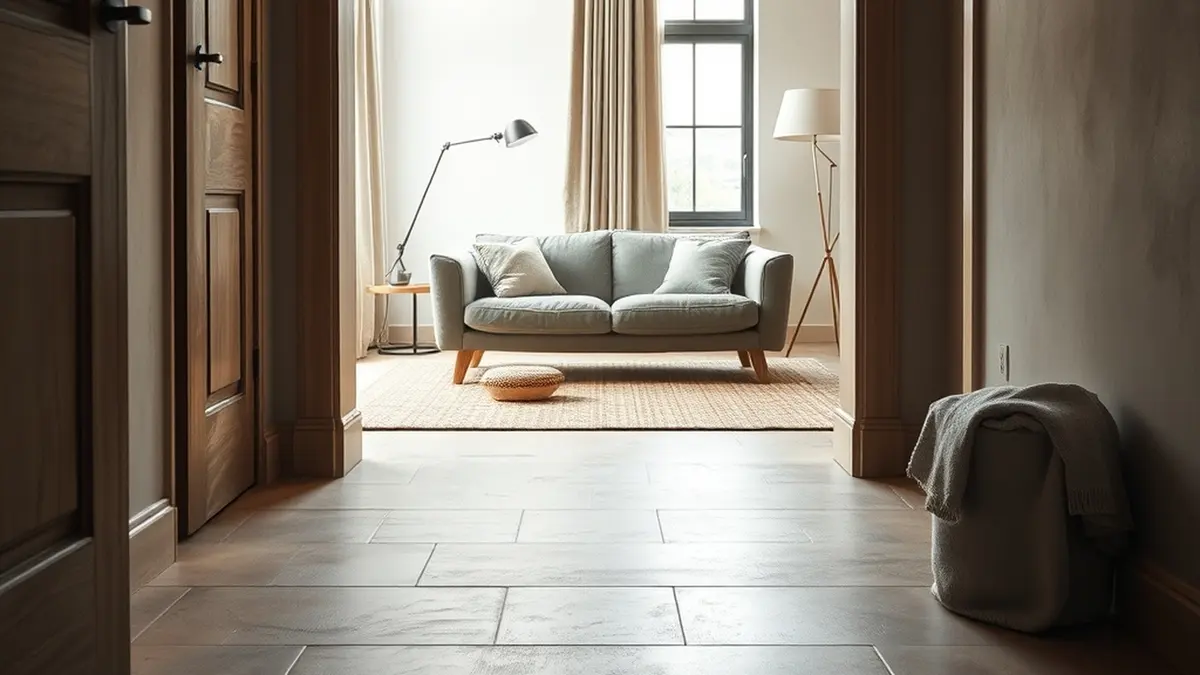
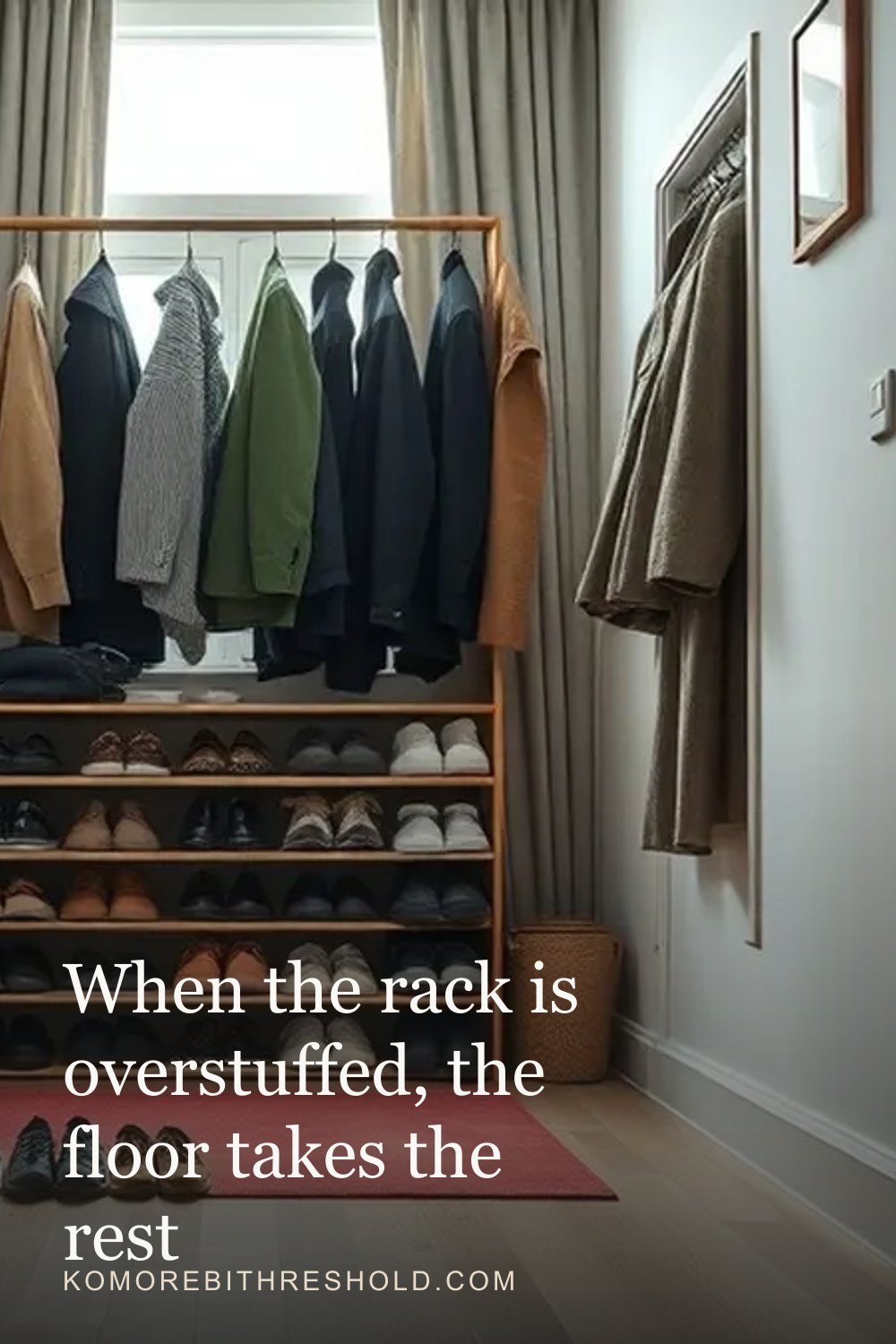
The pile at your door is not seven pairs of shoes. It is everyone's pairs, all week, plus the wet boots from today. The rack was sized for the shoes people wear, and nobody counted.
Instead of buying a bigger rack, decide how many pairs live at the door. Then give wet boots a different kind of home.
Watch the video version

Prefer to watch? The full walkthrough is on our YouTube channel. Subscribe for a new room guide every week.
The rule: a limit per person
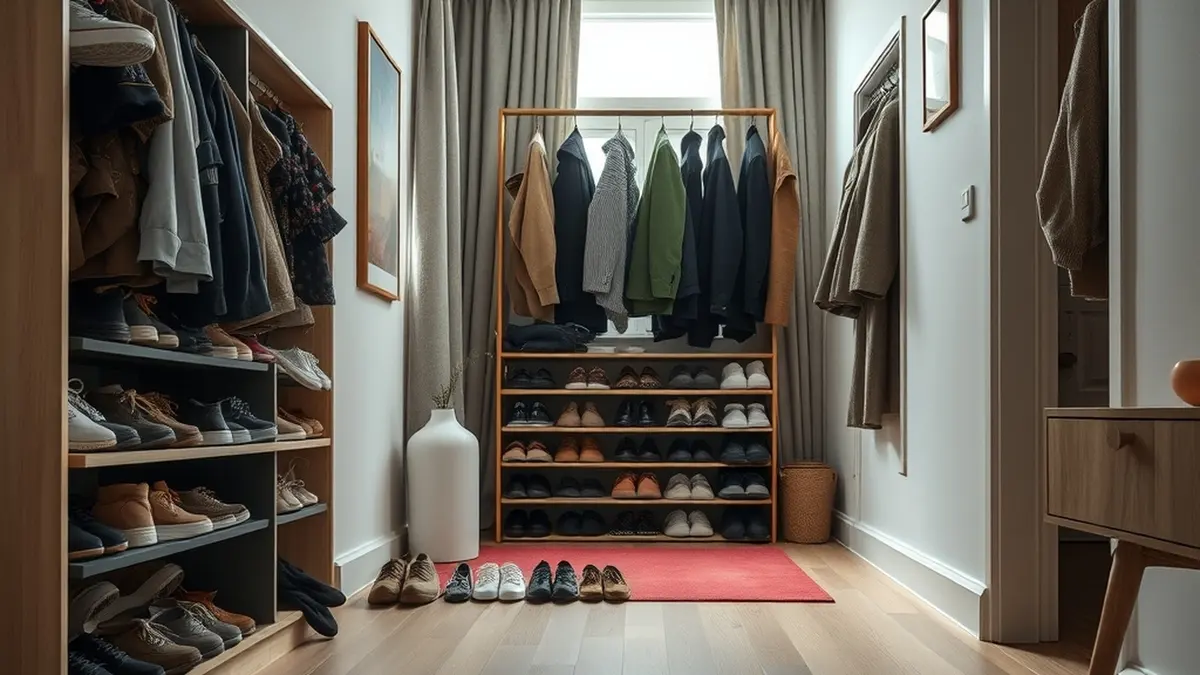
Pick a number for each person. Three to four pairs works for most households: one everyday pair, one pair for rain or snow, and one or two for other occasions. Everything else lives in a closet or under the bed.
The point is not to own fewer shoes. It is to let the door hold only what is worn this week.
Step 1: count what is there
Line every pair up in the hallway. Move out of the entry anything that has not been worn in a month. That alone often halves the pile.
Step 2: choose storage at seat height
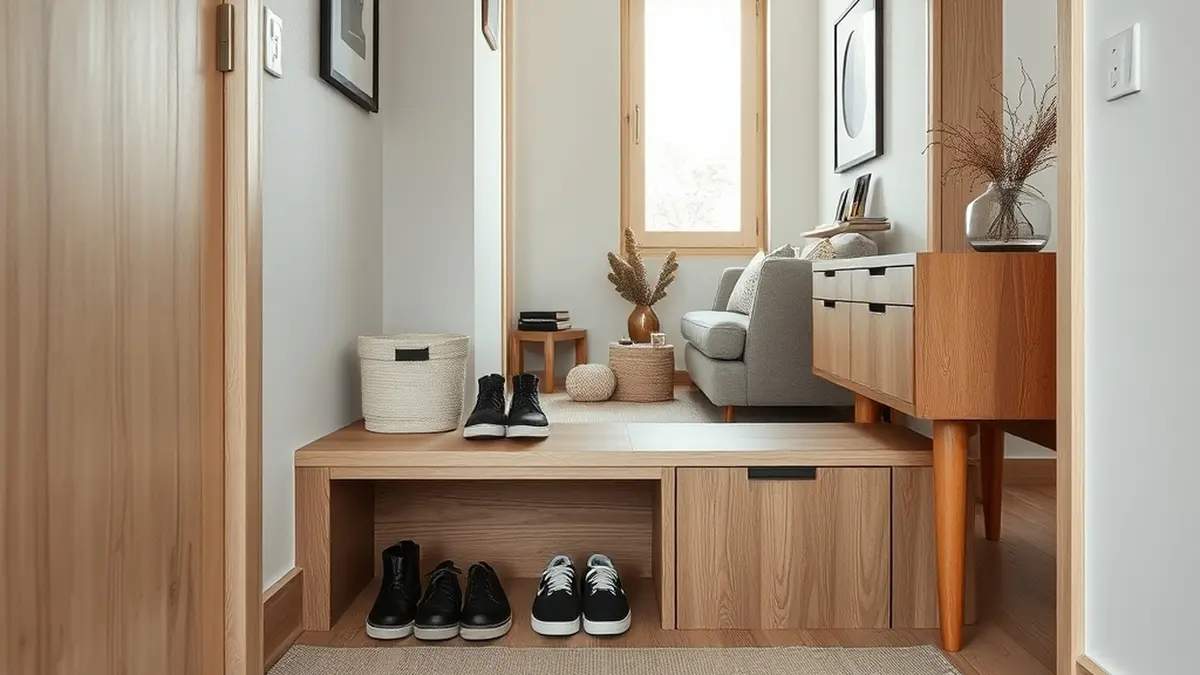
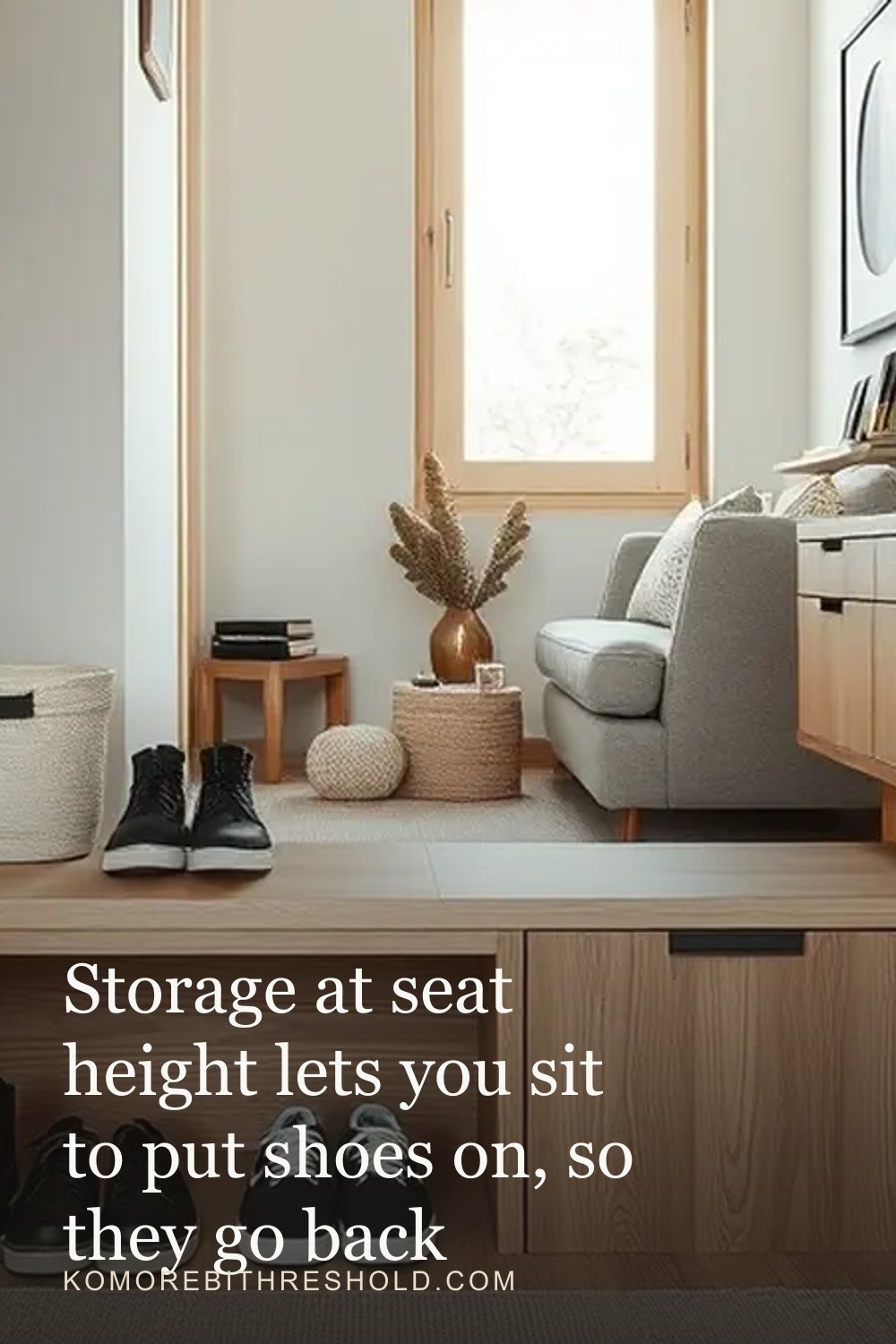
A narrow cubby or a low bench puts shoes at a height where you can sit to put them on. Standing and bending is what makes people kick shoes off and leave them.
Step 3: add a tray for wet boots
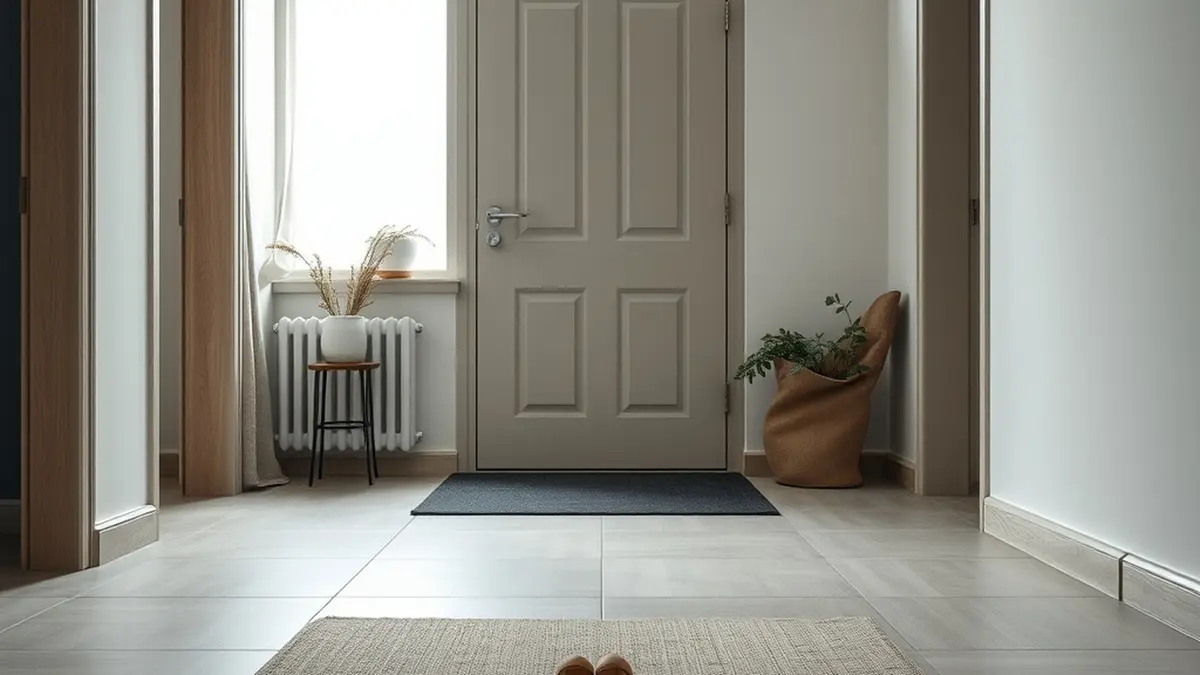
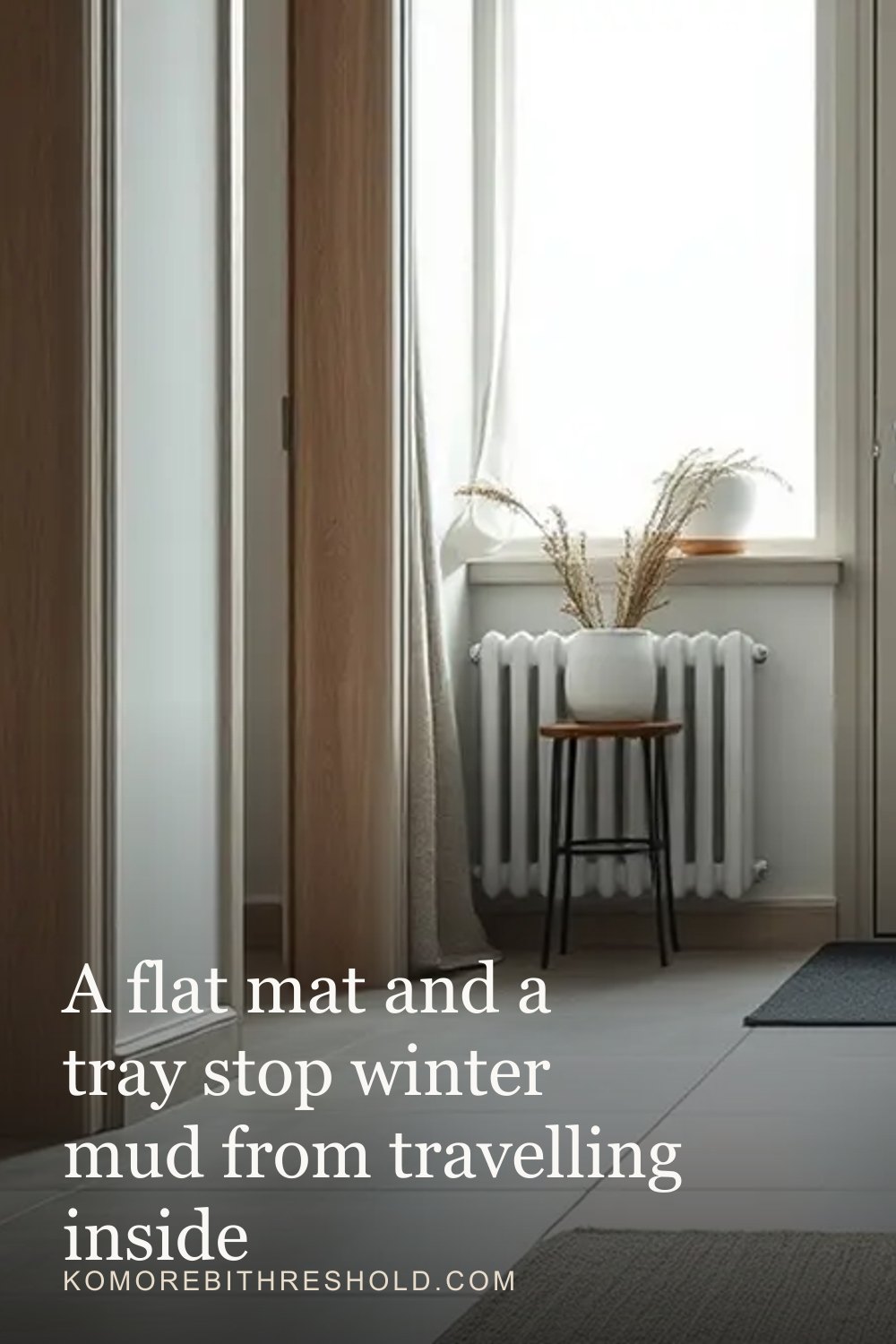
Wet boots do not belong on the shelf. A tray with a raised edge catches the melt, so water does not spread across the floor. Put it beside the door, not inside the rack.
Step 4: put a firm mat under the tray
Choose a mat that lies flat and sits tight to the floor, so wet boots do not slide it. A firm, low mat is also easier to shake out. The front door drop zone uses the same idea for bags and keys.
Common mistakes
- Buying a larger rack first. You will fill it too.
- Storing wet boots next to dry shoes. Moisture stays in the rack.
- Mat with raised edges. It catches the door and the toe of a boot.
For the shape of a whole entry that holds all of this, see Japandi entryway ideas.
What to look for
As an Amazon Associate I earn from qualifying purchases. These links open Amazon search results; we may earn a commission at no extra cost to you. You do not need to buy anything to use this guide.
- Slim shoe cabinetHolds the weekly pairs behind a door.Search on Amazon
- Boot trayCatches meltwater from winter boots.Search on Amazon
- Shoe benchSeat height storage.Search on Amazon
- Low-profile entry matLies flat and stays put.Search on Amazon
- Shoe horn longMakes sitting to put shoes on faster.Search on Amazon
Save these ideas
Images in this guide are AI-generated illustrations of the ideas described, not photographs of real homes.