Bedroom
Why Traditional Japanese Homes Had No Bedroom (and the Three Rules Worth Copying)
In a traditional Japanese home the bed had a time, not a place. Here is what that really meant, an honest note on the history, and three rules for a bedroom that stops working like an office.
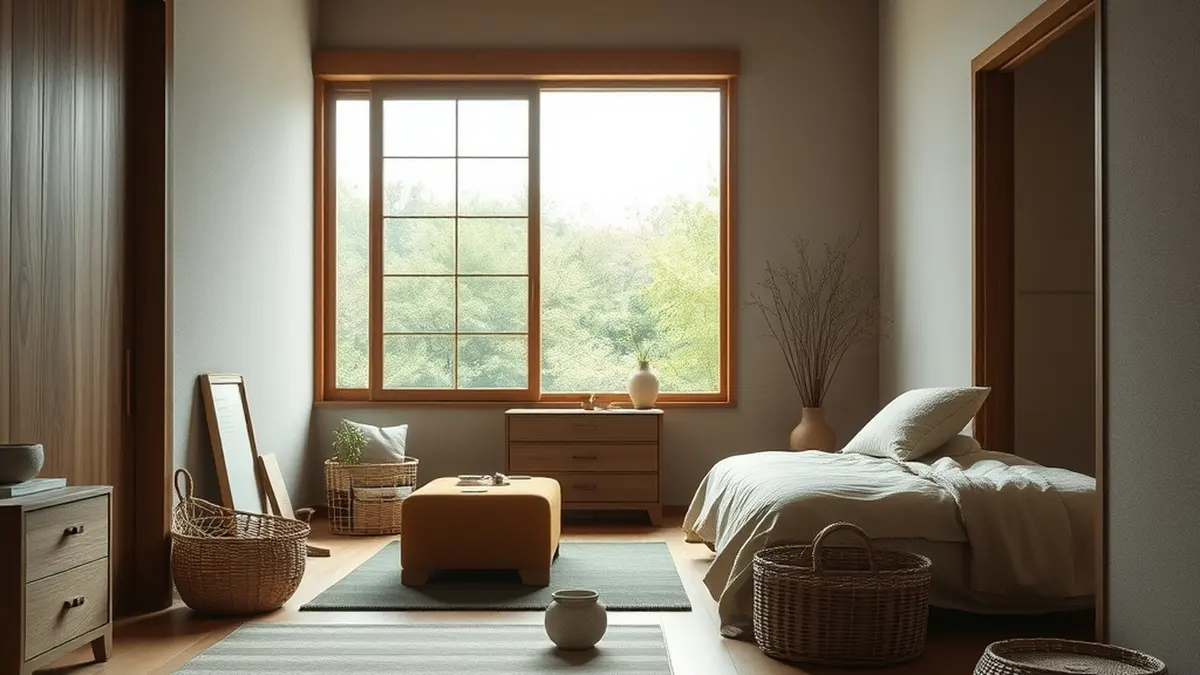
Your bedroom is also your office, your closet and your laundry rack. Tonight you will lie beside a laundry pile and a laptop bag, and your head will stay at work. You blame the mattress, but the mattress is not the problem.
Traditional Japanese homes had no bedroom at all. Hiding the bed was only half of it. The other half happens hours before bedtime, and you can start copying it tonight.
Watch the video version

Prefer to watch? The full walkthrough is on our YouTube channel. Subscribe for a new room guide every week.
What the room did during the day
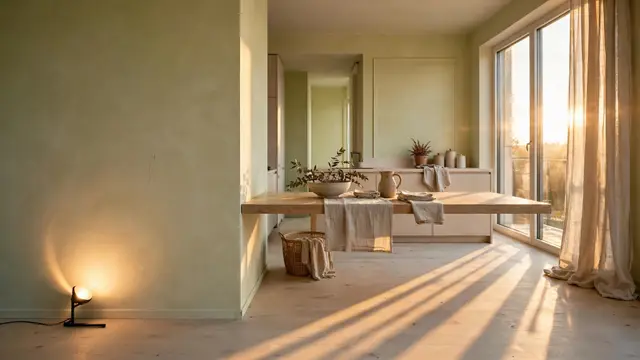
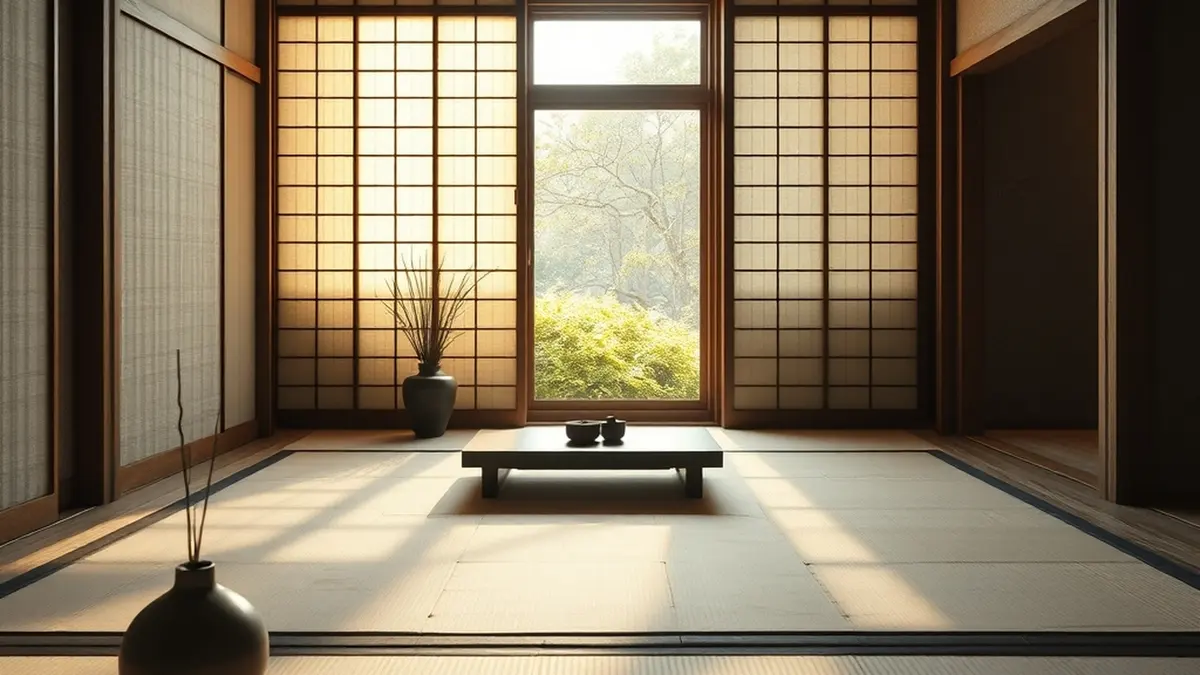
Light comes through paper screens and spreads soft and even across a woven floor. A low table and a few cushions are nearly all there is. No bed, no wardrobe, no dresser and no cable on the floor. Tea, meals and guests all happen here, so by day it is a room for living.
Sliding screens could close one large space into smaller rooms, so even the size of the room was a daily choice. Shoji are the translucent screens and fusuma the opaque ones. Nothing was fixed except the floor, posts, ceiling and paper.
What happened at dusk
Somebody opens a closet and lifts out a futon, a thin mattress and a quilt folded in thirds, and lays it directly on the floor. Within a minute the room has a new purpose. A futon takes up floor and nothing else. There is no headboard, no frame and no nightstand crowding the edge, so the air above stays open and the ceiling feels higher.
The room also has nothing in it that belongs to the day. No desk, no television, no charger glowing in the dark. You do not have to decide to leave work at the door, because the room has nothing that can ask you to work.
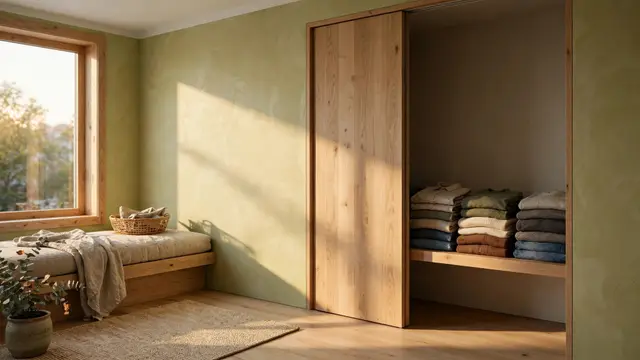
In the morning the futon is folded, lifted away and slid into the oshiire, a deep cupboard with sliding doors. The floor is bare again before the kettle boils. The daily airing also kept mold and mites away in a humid climate, so the habit had a practical reason as well as a calm one.
An honest note on the history
The oshiire is not ancient. Before it appeared, people slept wherever they could keep warm, often in the smallest room of the house. Many modern Japanese homes use real beds in western-style rooms. So this is not a story about Japan solving sleep. It is one way of living that gave the bed a time, not a place.
Three rules worth copying
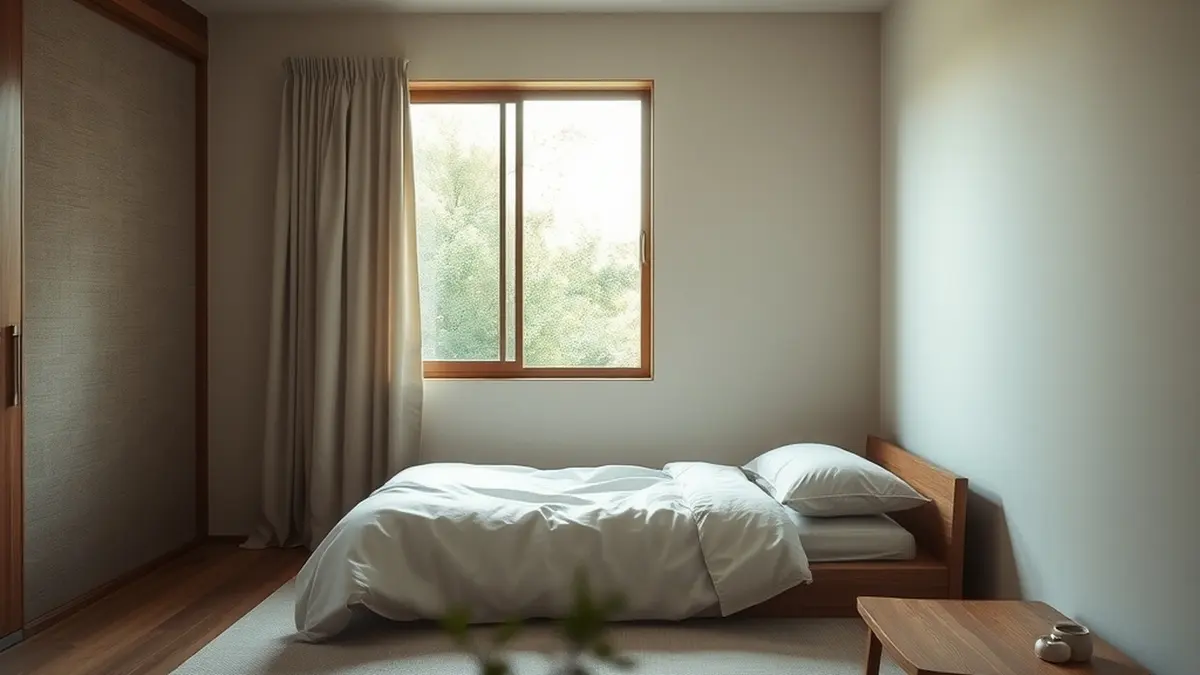
Rule 1: Carry the day out. Before bed tonight, take the laptop bag and laundry into another room. If it belongs to the day, it does not sleep here. Count the surfaces you can see from the bed: how many are wood, plaster, wool or cotton, and how many are plastic?
Rule 2: Give each surface one job. The bed gets sleep. Work, scrolling and folding clothes move to a chair, a table or another room. Keep the bedside to a lamp, a glass of water and one book. The one-object bedside rule shows how.
Rule 3: Give the rest a closed home. One closed cupboard, wardrobe shelf or lidded ottoman holds throws, spare pillows and the laundry. If you share the room, a screen turns it into a bedroom at night and an office by day and hides what the closet cannot.
Want to try the floor-bed version itself? The futon morning routine covers layering, airing and storage. If you keep your bed, see why your bedroom never feels restful.
What to look for
As an Amazon Associate I earn from qualifying purchases. These links open Amazon search results; we may earn a commission at no extra cost to you. You do not need to buy anything to use this guide.
- Lidded storage ottomanA closed home for throws and spare pillows.Search on Amazon
- Folding room dividerHides the desk or the closet gap.Search on Amazon
- Lidded laundry hamperGets laundry off the bed and floor.Search on Amazon
- Plain alarm clockLets the phone charge in the hallway.Search on Amazon
- Warm bedside lampOne lamp, low and warm.Search on Amazon
Save these ideas
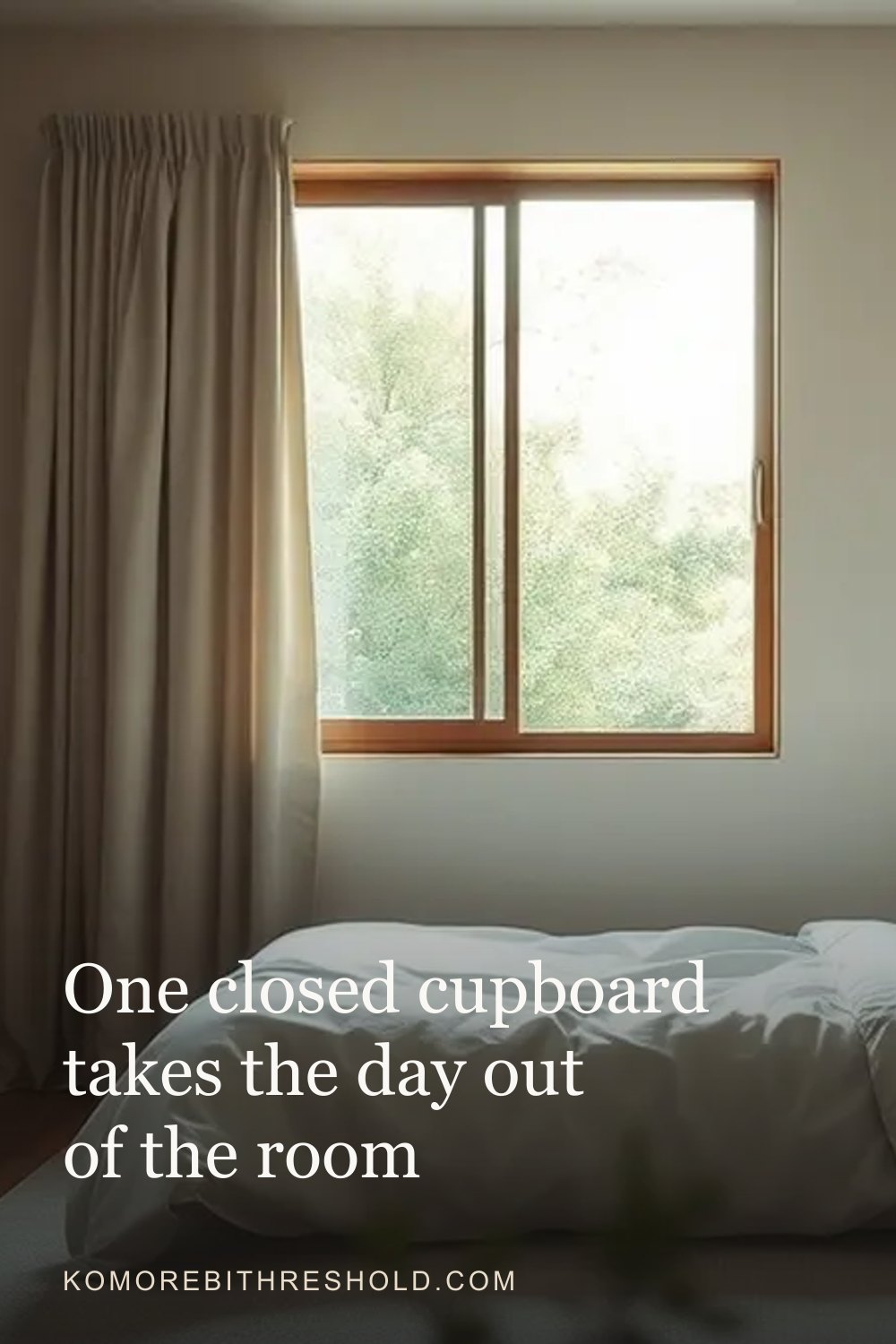
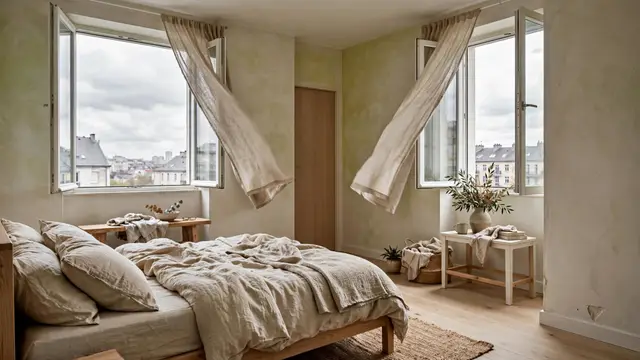
Images in this guide are AI-generated illustrations of the ideas described, not photographs of real homes.