Kitchen & Bath
Japandi Open Shelves: How to Style a Kitchen Shelf Without Clutter
How to style open shelves in a Japandi kitchen: leave gaps, limit materials, keep daily dishes in front and put the rest behind a door.
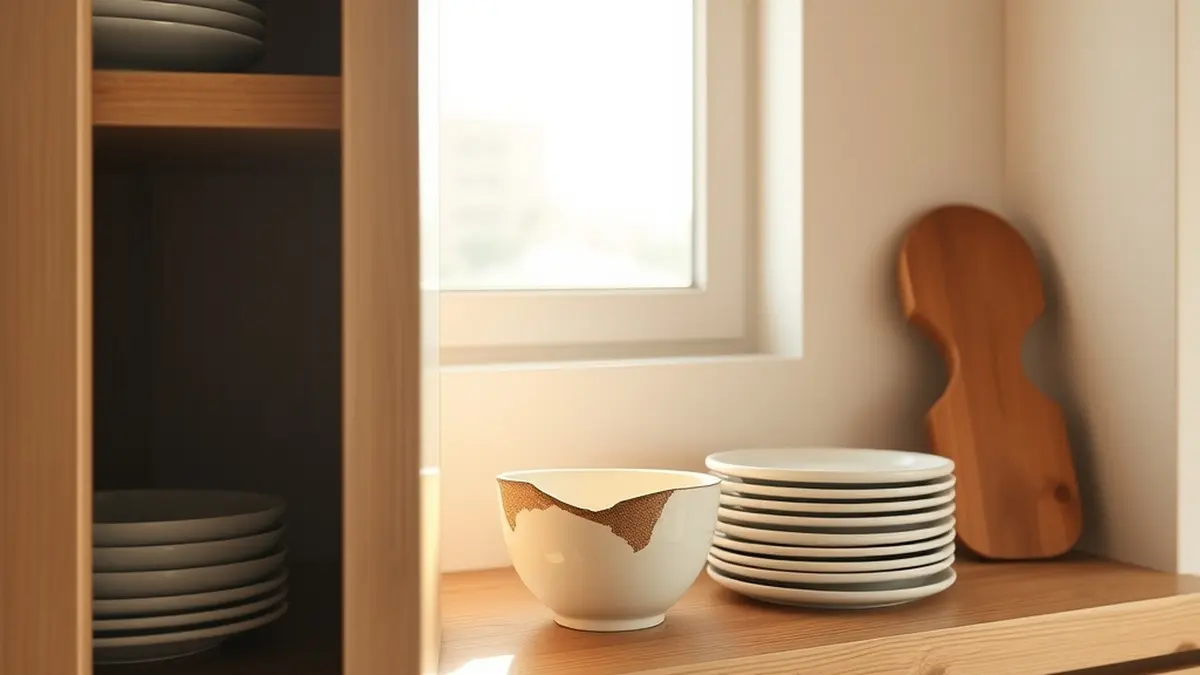
Open shelves look calm in photos and crowded in real life. The difference is rarely the shelf. It is what is on it, and how much air is left around each thing.
This guide gives you five rules that make an open kitchen shelf feel like part of the room, not a storage problem on display.
Watch the video version

Prefer to watch? The full walkthrough is on our YouTube channel. Subscribe for a new room guide every week.
Rule 1: leave gaps
A shelf that is full from end to end reads as a wall of stuff. Leave about a hand's width of bare wood between groups, and keep at least one third of the shelf empty. That emptiness is what lets the eye rest on the objects you did choose.
Rule 2: one material family
Pick two or three materials and stay inside them: unglazed or matte ceramic, natural wood, linen. Glossy plastic, bright labels and mixed metals pull the eye in several directions at once. If a jar has a loud label, decant it or move it behind a door.
Rule 3: daily dishes in front, everything else behind a door
An open shelf works best for the things you use every day, because they get washed and put back constantly and never gather dust. That usually means one stack of bowls, one stack of plates and a few cups. Rarely used things go in a closed cupboard or a box on a high shelf.
A simple split:
- Daily: open shelf, within easy reach
- Weekly: closed cupboard
- Occasional: boxed, labelled, high shelf
Rule 4: group in odd numbers and vary height
Three bowls stacked, one tall jar, one small plate leaning on the wall. Odd groups with different heights look natural. Rows of identical items look like a shop display, which is not what you want to live with.
Rule 5: one object that is not useful
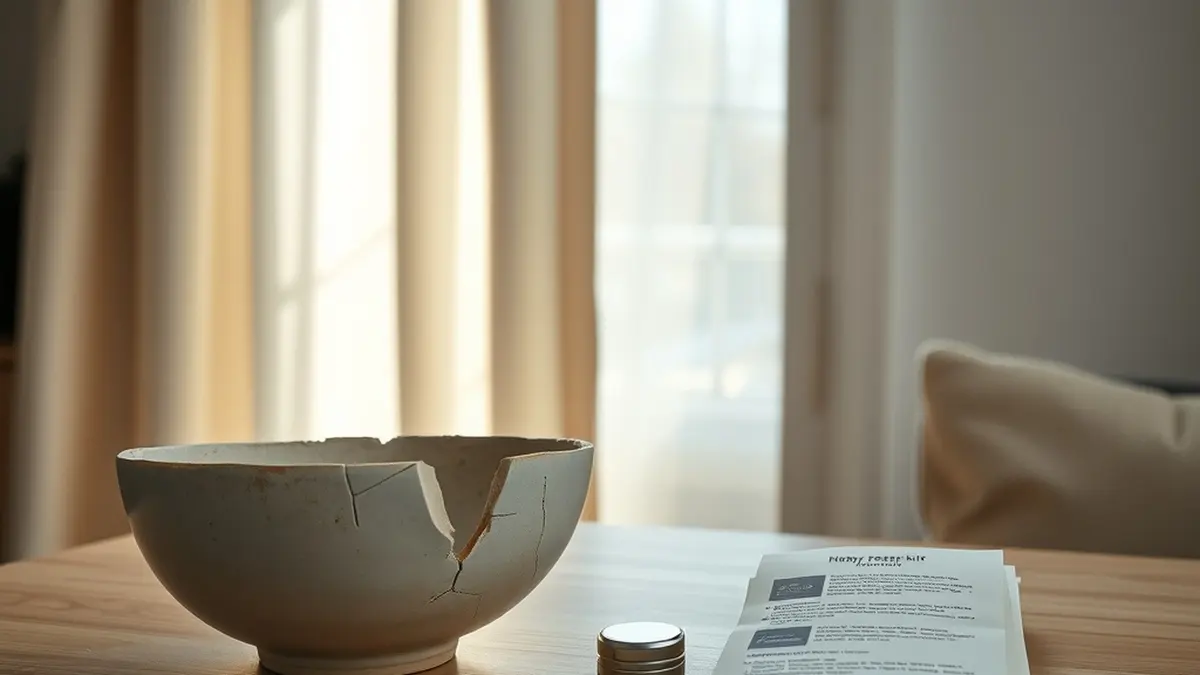
Japanese rooms often keep a single quiet focus: a branch, a scroll, one good piece. On a kitchen shelf, that could be one handmade bowl, a small plant or a mended piece with a visible repair. It gives the shelf a point of view. See how to repair instead of replace for the repair idea.
Common mistakes
- Styling with objects you do not use. They collect grease and dust and add visual noise.
- Stacking things to the shelf above. Leave a gap of at least a few centimetres above the tallest object.
- Matching everything. A perfect set looks staged. A few related pieces look lived in.
- Putting an open shelf over the stove. Grease will settle on everything. Keep open shelves away from heat and frying.
Check your shelf in one minute
Stand across the room and squint. If you cannot tell where one group ends and the next begins, remove a third of what is there. Then step back again.
Open shelves also need the counter below them to stay clear. If it does not, start with the three-zone counter method.
What to look for
As an Amazon Associate I earn from qualifying purchases. These links open Amazon search results; we may earn a commission at no extra cost to you. You do not need to buy anything to use this guide.
- Matte stoneware bowlsQuiet surfaces that suit open shelving.Search on Amazon
- Floating wood shelfA simple shelf that leaves visible wood around objects.Search on Amazon
- Glass storage jars with wood lidReplaces loud branded packaging.Search on Amazon
- Wood shelf bracketA visible support that matches the shelf.Search on Amazon
Save these ideas

Images in this guide are AI-generated illustrations of the ideas described, not photographs of real homes.