Layout & Small Spaces
Why Your Balcony Never Gets Used (and the Engawa Fix)
A balcony goes unused when it feels like a storage ledge. Borrow the Japanese engawa idea: a low edge, one seat, one plant and a visible threshold.
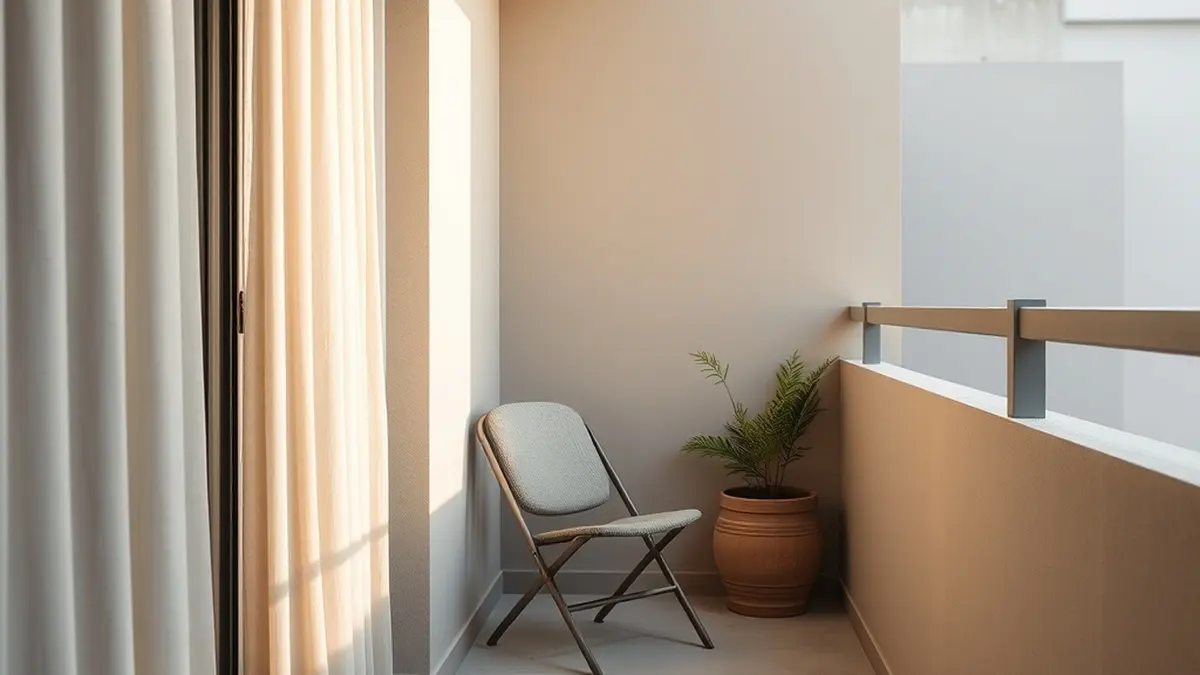
You have a balcony and you never sit on it. It holds a dead plant, a clothes rack and two boxes you meant to move. The door is mostly a way to hang laundry.
The balcony is not too small. It is a leftover space with no job and no invitation, so it does what leftover spaces do: it collects things.
Watch the video version

Prefer to watch? The full walkthrough is on our YouTube channel. Subscribe for a new room guide every week.
The engawa idea
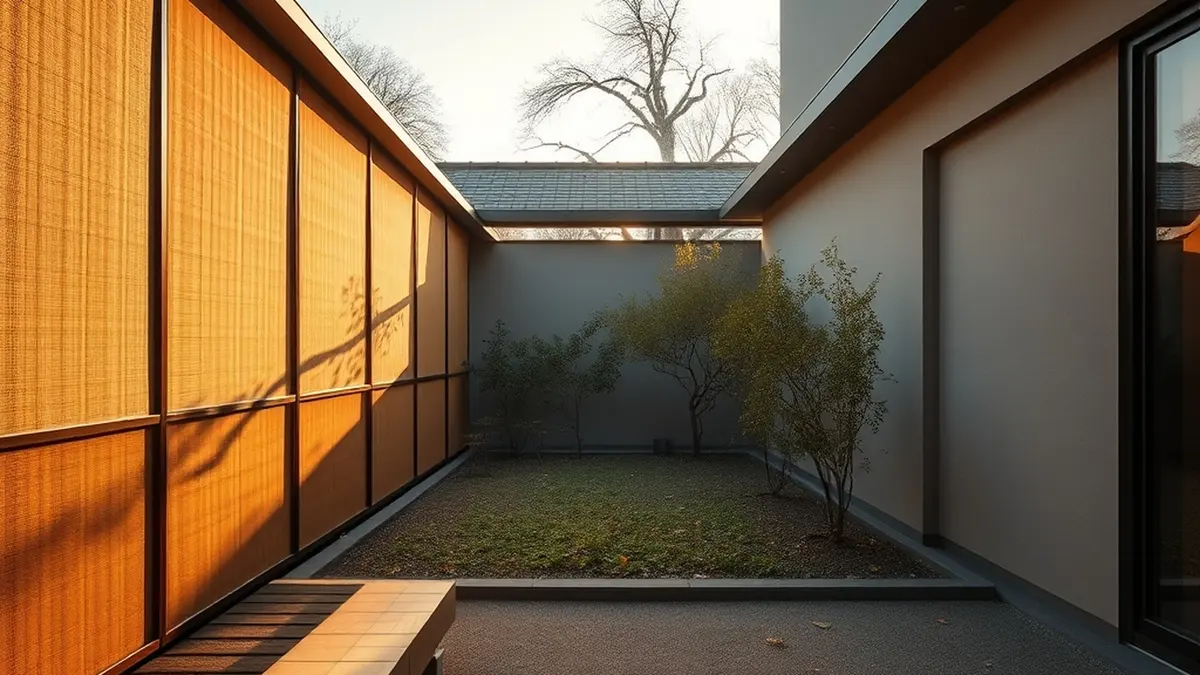
In traditional Japanese houses, the engawa is a narrow wooden veranda between the room and the garden. It is neither fully inside nor fully outside. People sit on its edge with tea, watch the rain, or take their shoes off there. It works because it has a clear purpose: it is a place to sit and look out.
A balcony can borrow that role. It does not need to be large. It needs a threshold, a seat and a view.
Four changes
- Clear the floor first. Remove everything that does not belong outside: boxes, tools, the old rack. A bare floor is the first signal that the space is for sitting.
- Make a clear threshold. Put a small mat or a strip of timber decking tiles at the door so you step from inside to out. Keep the door sill free so you can walk through comfortably.
- Add one low seat. A low stool, a bench or a floor cushion beside the door. Low seats feel relaxed and keep sight lines open.
- Add one living thing. A single planter, placed in a corner, gives you something to look at. Choose a plant that suits your light and wind, and use a saucer so water does not run onto the neighbours' floor.
Make it comfortable in poor weather
- Wind: a screen or a tall planter on the windward side makes a surprising difference.
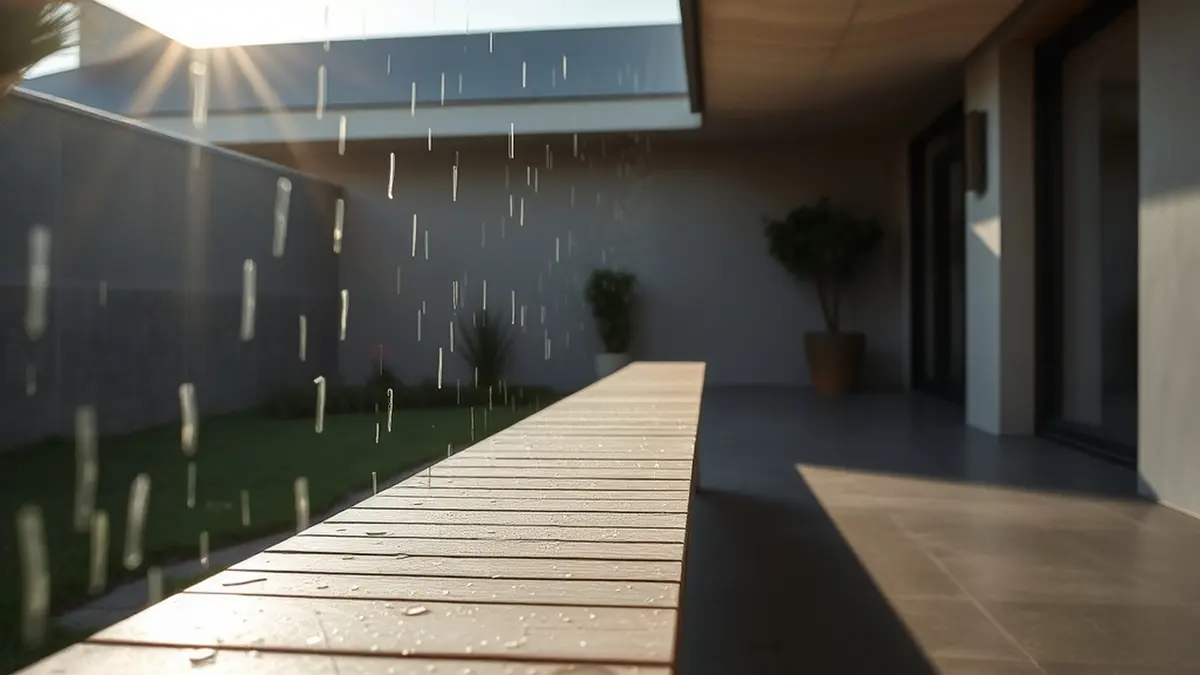
- Rain: if you have an overhang, a rain-friendly cushion lets you sit even in drizzle.
- Evening: a small solar lantern or a string of warm lights gives enough light to sit by. Check your building's rules before attaching anything to railings.
- Privacy: reed or bamboo screening along the railing softens the view of neighbours.
Safety and rules
- Balcony floors have weight limits. Avoid heavy planters and large water features, and ask your landlord or building manager if you are unsure.
- Do not place furniture where a child could climb it to reach the railing.
- Do not store anything that could blow off in strong wind.
- Check building rules about screens, lights and plants.
Daily habit
Drink your tea or coffee there for five minutes before work. The balcony only feels like a place when you use it, and a small ritual does more than a makeover.
For other ways to use awkward edges in a small home, see why a tidy room still feels crowded.
What to look for
As an Amazon Associate I earn from qualifying purchases. These links open Amazon search results; we may earn a commission at no extra cost to you. You do not need to buy anything to use this guide.
- Outdoor matMarks the threshold and keeps sand off the floor inside.Search on Amazon
- Low folding stoolA low seat that stores flat.Search on Amazon
- Bamboo privacy screenSoftens the view and blocks wind.Search on Amazon
- Solar lantern warmA soft light with no wiring.Search on Amazon
Save these ideas
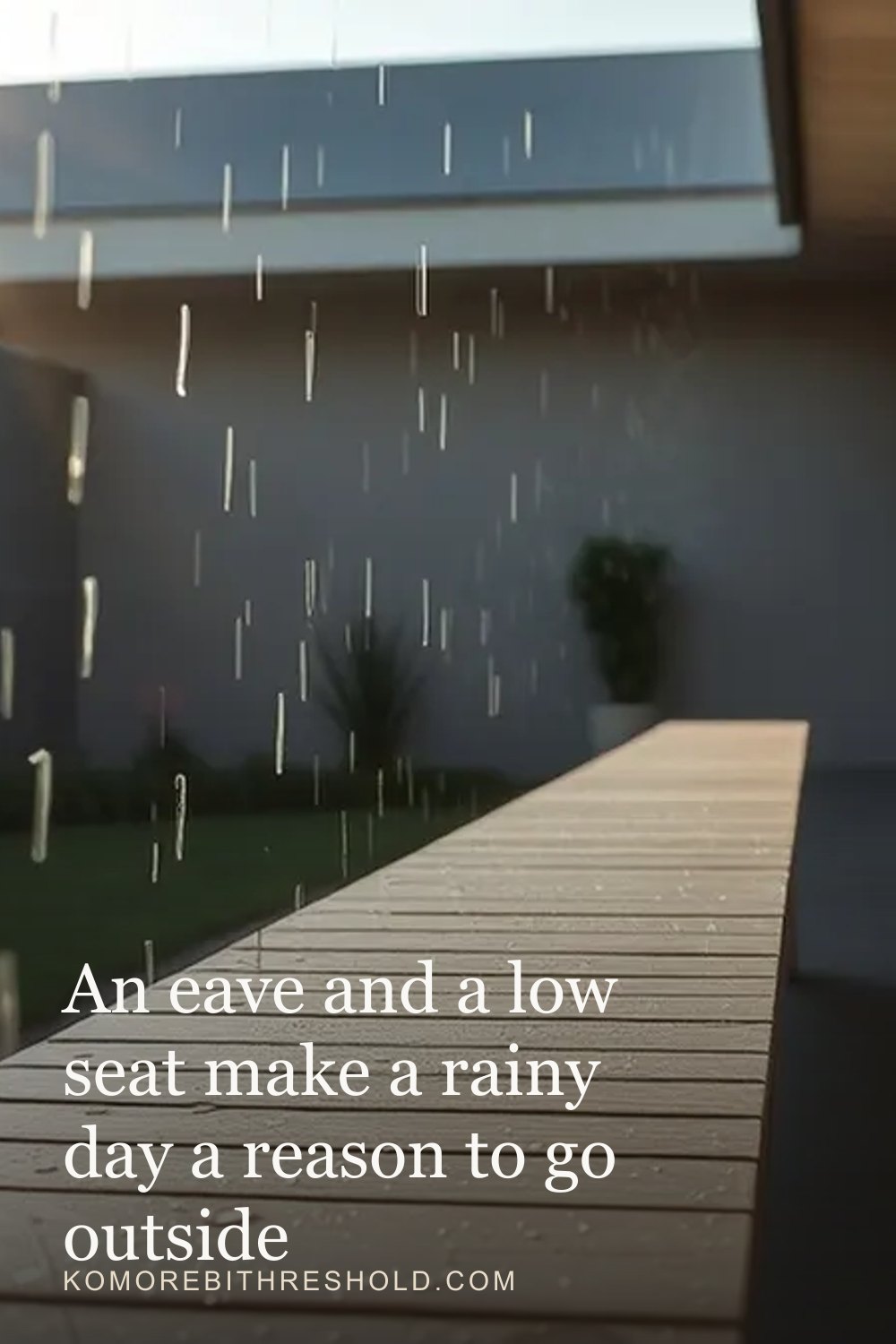
Images in this guide are AI-generated illustrations of the ideas described, not photographs of real homes.